Walking in the World

White Point sign

BY KIMBERLY MAYER

There are people in our lives who have an influence they’d never know. My parents instilled a love for Cape Cod that we find in many ways living here on San Juan Island in Washington. The friend in California who suggested a year or so ago that I rein in this blog to a remodeling theme: remodeling a house, remodeling a life—the same thing, in my book. Our daughter, now living in Argentina, who upon visiting before her departure grew my daily walk by a beautiful mile or two. And in sending me a video of the works of sculptor Anthony Howe on neighboring Orcas Island, my cousin in Atlanta reminding me to stay with art every day. And to try not to stray.

They are all part and parcel of who I am, why I’m here, and how I see it.

“Walking the loop” began as a tradition while living on upper Queen Anne in Seattle and continues out here today. That first loop took me around the perimeter of the hill, overlooking the Space Needle and downtown Seattle, Lake Union, and Puget Sound. Today’s loop takes me alongside Westcott Bay, and through the red, white and blue nostalgic quality of Roche Harbor Resort where everyone looks good in the light. Finally, the road meanders through an old growth forest of cedar, fir, and pine where everything grows dark and green, and back to my home on the bay.

Where the road dips down to the shoreline I experience what I call a Cape Cod moment, framed by flatlands, grasses, marshes, and horizon. In the course of this walk I may pass only one or two cars on the road, a few more in summer, on an island where every driver waves.

This is the walk my daughter grew, taking it out on a point to new terrain, the posh end of White Point Road. Here I pass tennis courts where nobody’s playing, a pond with a dock establishing someone’s swimming hole, and a private golf course back in there somewhere, for I’ve seen it from the water. Horse fencing and regally high pampas grasses standing like sentry guide the way. Crushed white shells underfoot line the one-lane road at sea level. It’s as private as private can be, except for me, out on this point.

Here I gape at houses, something that seems to be my lot in life: the desire to see myself in other spaces, other places. On walks I finish unfinished houses in my mind, or tear them down and start again. As anyone in the field knows, design is never done. When the bones are good, I may mentally repaint it, or envision it clad in cedar shingles, dark, red, natural or a weathered gray.

At home, the short video on the kinetic sculpture of Anthony Howe awaits me. It’s mesmerizing. How did my cousin know to send this now? I needed it. Isn’t art what ultimately pulls us through? All the arts, always. And art as balm, particularly in troubling times. Which is where we are today.

“After reading the newspaper on Sunday, I sit quietly and simply look at art books.” Michael Graves

10 Comments

Filed under art, design, remodeling, walking

Finding Bigfoot

Bigfoot4_p01

BY KIMBERLY MAYER

I don’t know that I’ve ever stayed in one of the WPA era National Park Service Rustic Lodges, but I’ve been there in my dreams. Where guests rock in rocking chairs with wool throws over their laps and steaming mugs in hand before a great stone fireplace, knowing they are safe from bears.

The look and feel of a lodge is what I long for in winter, and I continually ask how can I bring a little of that to my home on the water in an old growth forest in the Pacific Northwest?

Nature provides all the drama here. Wind storms come off the sea in winter and everything keels over but the house and the strongest trees. A forest so dense, it regularly thins itself out. After each storm, the ground is carpeted with cedar needles, softening and quieting the outdoor world.

Our dog’s bed lies at the foot of the fireplace, where she always faces the fire. “It brings out the wolf in her,” we note. In the  summer, we move to sitting around a bonfire in the evenings. We may not have wolves but on full moon nights fox congregate on the beach to yip at the moon.

Back in the house in winter, candles stand in lanterns posed for a power outage that rarely comes–it’s almost disappointing. Soup’s in the slow cooker, one recipe after the other. We all agree the second day is tastier than the first. This far north a mud room is called “the Alaska room,” where a third of the contents are rain gear, boots and waders.

We walk everywhere. Over to the marina to check on things daily. There’s the mail to pick up, and a little market that never disappoints me, no matter what I need. Everything conspires against taking the car, and not to ferry off island–for as long as possible.

Nature is a gentle giant here. Short of a tree falling on one’s head, I can’t think of any real danger. Besides the people who are few and friendly, the island is populated with deer, little foxes, raccoon, rabbits, comfortable cows, horses, goats, sheep, alpaca, and a camel. Plenty of birds overhead, though the eagles think they own the airspace.

You can see where I’m going, there is nothing to fear here. And creating a lodge is not all about weathered or salvaged wood, rock, leather, burlap, Native American blankets, wrought iron, rusted iron, sliding barn doors and antler chandeliers. There ought to be an element of adventure, if not danger, to it.

So I invent something while walking in the woods. I invent Sasquatch, or Big Foot, for myself. Though no one sees her, I am certain she’s here. Big and hairy, perhaps 10ft tall, yet gentle and shy. Maybe.

Assuming they are nocturnal, I look for her sleeping by day. I look between the trunks of giant cedars for an outstretched arm or leg, a 24” foot protruding out. I look over moss covered rocks for her enormous head at rest. I figure she’s gone brown and green with the forest over the years. Lichen probably grows on her. She is hard to spot.

It makes for a more welcoming homecoming. Knowing she’s out there and shutting the door behind me, helps this house become a lodge.

6 Comments

Filed under fear

Indigenous Design

Pillows on chairs

By KIMBERLY MAYER


Do you remember it? All around New York City in the 1980’s people were hoisting lodge poles into their apartments, redoing floors in Saltillo tiles, hanging antler chandeliers with forged iron hardware, trying to grow specimen cacti in native baskets, and trading in their Limoges, Waterford, and Baccarat crystal for Indian pots and Mexican glassware.

Meanwhile, Christine Mather’s design book Santa Fe Style was selling like hotcakes off the shelves. I know, for I purchased a copy.

I remember too when my mother hired an interior decorator who remodeled a graciously large bath in our Georgian Colonial home c. 1823 in an abstract modern blaze of turquoise and aqua, papering even the cupboard doors.

I knew then, as I know now, something was not right.

Much as we have learned to prepare foods fresh, farm to table, we need to design our spaces with a sense of place. Local is the new exotic.

It doesn’t mean we can’t throw in a dash of turmeric or smoked paprika. In interiors too the excitement is often in juxtaposition, such as industrial steel with rustic. But to pull that off we must keep one solid foot, at least, in where we are—otherwise, the “other” won’t come off at all.

You can’t pretend you are living on Canyon Road in Manhattan.

You can’t make a vintage bath, in tiles, fixtures and architecture, suddenly modern with wallpaper.

And Tommy Bahama prints on retro rattan furniture are only going to fly where it’s barefoot and warm and by the beach. Preferably in Hawaii.

6 Comments

Filed under Uncategorized

Ode to Navy

Living Room View

By KIMBERLY MAYER


Think of a house as a living creature–I know I do—and it turns out that houses have auras too. I always saw this home’s aura as navy blue.

Perhaps it’s because at the time of renovation we were living on a boat where, against the teak, every stroke of navy was successful. It only follows that I would do much the same with the house.

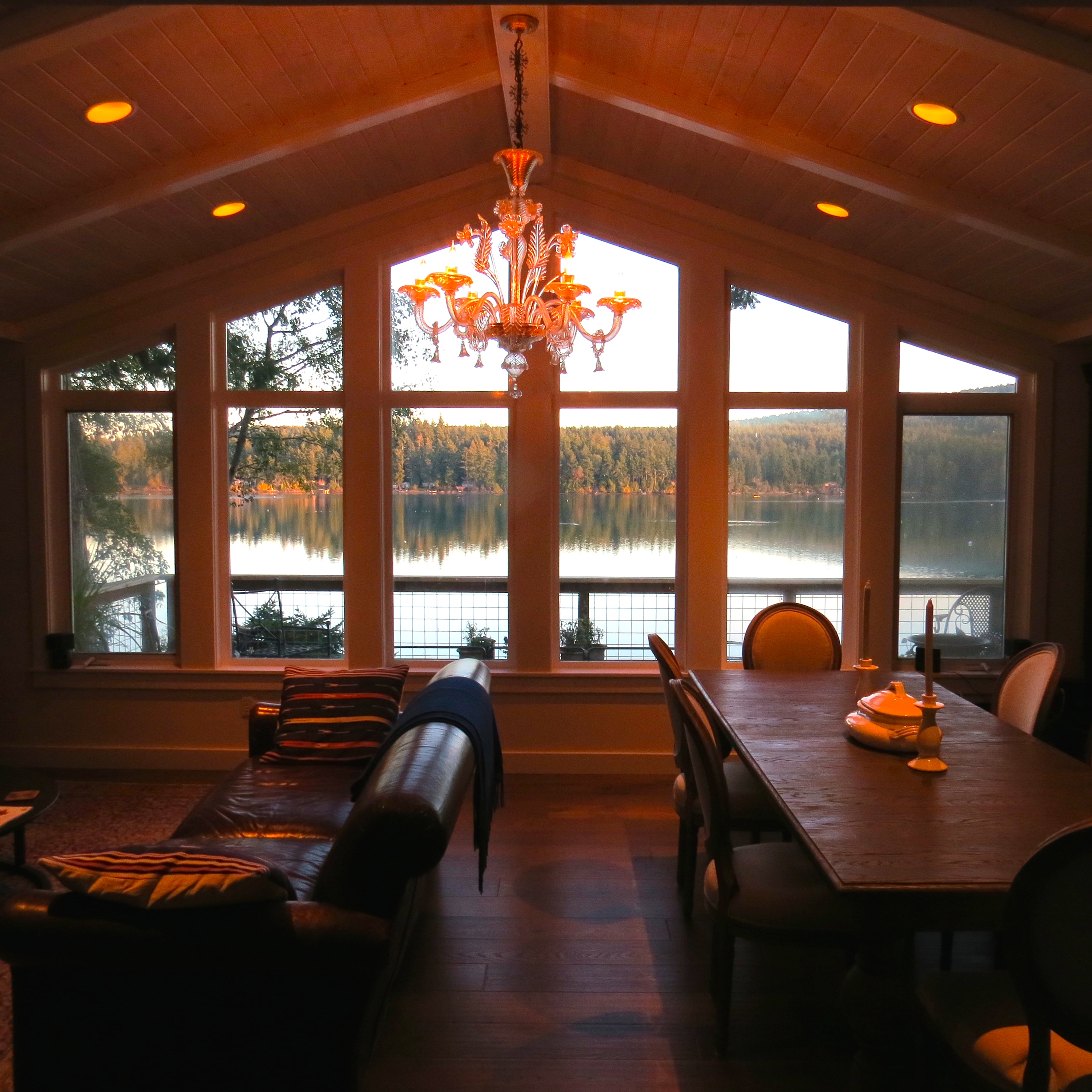
The hardwood floors we put in are a rustic gray/brown, reminiscent of the weathered docks at Friday Harbor Marina. The window (pictured) is our artwork, just as we used to sit and view sea and sky from the boat’s upper helm. I knew that in doing this house, nothing should detract from the view by day. And that on velvety dark nights, we would just need a little warmth–what color, textiles and lighting can do–until sunup.

Navy is the only blue, to my mind, that is warm at night and in winter.

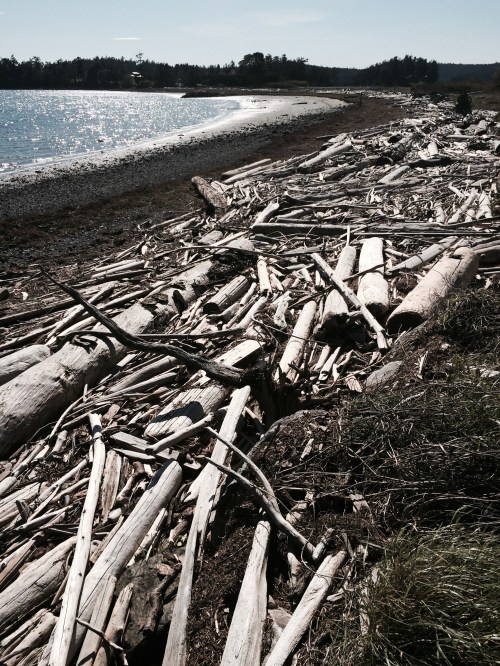
Even in August, it would be a stretch to read Mediterranean blues, turquoise, aqua, and seafoam into The Pacific Northwest. French blue would leave us chilled for half the year. Regardless of the season, our beach experiences are about wearing something sensible on our feet and building bonfires. The sand is not a hot blinding white, but soft and muddy. Our beachscape is described by sea grasses, driftwood logs gone adrift and come ashore, oyster shells, and rocks.

Like a good espresso or black coffee, navy blue works year round. And with it, some reds, taupe, and beige. Think: Pendleton  blankets. This is where nautical meets North Coast Indians.

In our remodeled home the living, dining and kitchen are one great space, one wall of which–the fireplace wall–is rock. On the cathedral ceiling, whitewashed tongue & groove pine boards. Ethnic rugs scattered on rustic hardwood floors. A deep, dark brown leather sofa and oatmeal linen upholstered chairs. Those are the “bones.”

The rest was easy: pillows and throws, table linen, pottery and porcelain, predominately in navy blue. The color I put my confidence in, because early on, the house and the land and sea whispered navy to me.

3 Comments

Filed under Uncategorized

HGTV & the NRA

6040388496_c43ecca70c


BY KIMBERLY MAYER

Not an easy assignment I have given myself: to keep up my remodeling blog while away from home. I have been visiting my folks in their retirement home outside Boston, where Mom and I have taken to HGTV every evening.

Here one by one, every half hour, we see a fixer-upper through to completion. Oh, the feeling of accomplishment! Oh, the joy! Young people moving into a first home, empty nesters downsizing. The American dream. Or my favorite, the vicarious pleasure of living in other lands with “House Hunters International.”

The HGTV tradition began as a deliberate plan on my part to take my parents right through the news–to bypass it, in other words. I turned the channel on during one visit when ISIS seemed to morph overnight. One day we had never heard of it, the next day it was all the news. The President was calling it ISIL, the media, ISIS, and we were all asking, which is it? What is it?

And now this week, it was HGTV’s job to steer them away from the carnage in the mass shooting at Umpqua Community College in Roseburg, Oregon. This is not the country Mom and Dad knew. But it’s the country we’ve been dealt. The one we know all too well now.

I catch up with the news online, of course, quietly, in the night. There, I tend to live in a carefully cultivated circle of intelligent friends who all feel the same way. So round and round we go in our rage over a Congress, and thus a country, held hostage by the NRA.

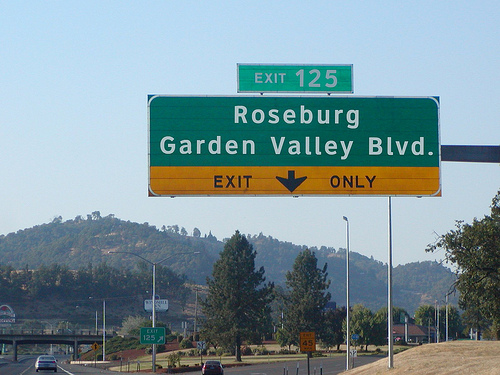
And I know that when I return home, there will be another heavy-hearted landmark on I 5, the road we travel frequently. The “Marysville” exit, forty miles North of Seattle, site of a mass high school shooting less than a year ago. And now, when we’re traveling through Oregon en route to San Francisco, “Roseburg.” The big green interstate signs by which we mark our progress.

The new American map.

Leave a comment

Filed under mass shootings

The Virtues of Being a Basketcase

Alaska room pic

By KIMBERLY MAYER


Two books are before me on my writing table: The Life-Changing Magic of Tidying Up, by Marie Kondo and Mess, by Barry Yourgrau. Two drastically different books on decluttering—one, so Zen, and the other, well, messy. I have browsed, pondered, read reviews on each, but haven’t dove into either yet. Instead I seem to be writing my own: a case for baskets.

A long time ago in what seems like another life, I lived on St. Thomas USVI and my passion for baskets started there, at The Shipwreck Shop in Charlotte Amalie. Moving from one rental to another, I furnished my homes with straw rugs and tropical trees standing about in baskets, dined on mahogany plates from down island, and donned straw hats as protection from the Caribbean sun. I practically lived out of The Shipwreck Shop and the look has been with me ever since, even now, on San Juan Island in the Puget Sound.

Baskets, I have found, pretty much work with any type of décor. Lately, what I like is juxtaposing baskets with the industrial. A winning combination: rustic and industrial.

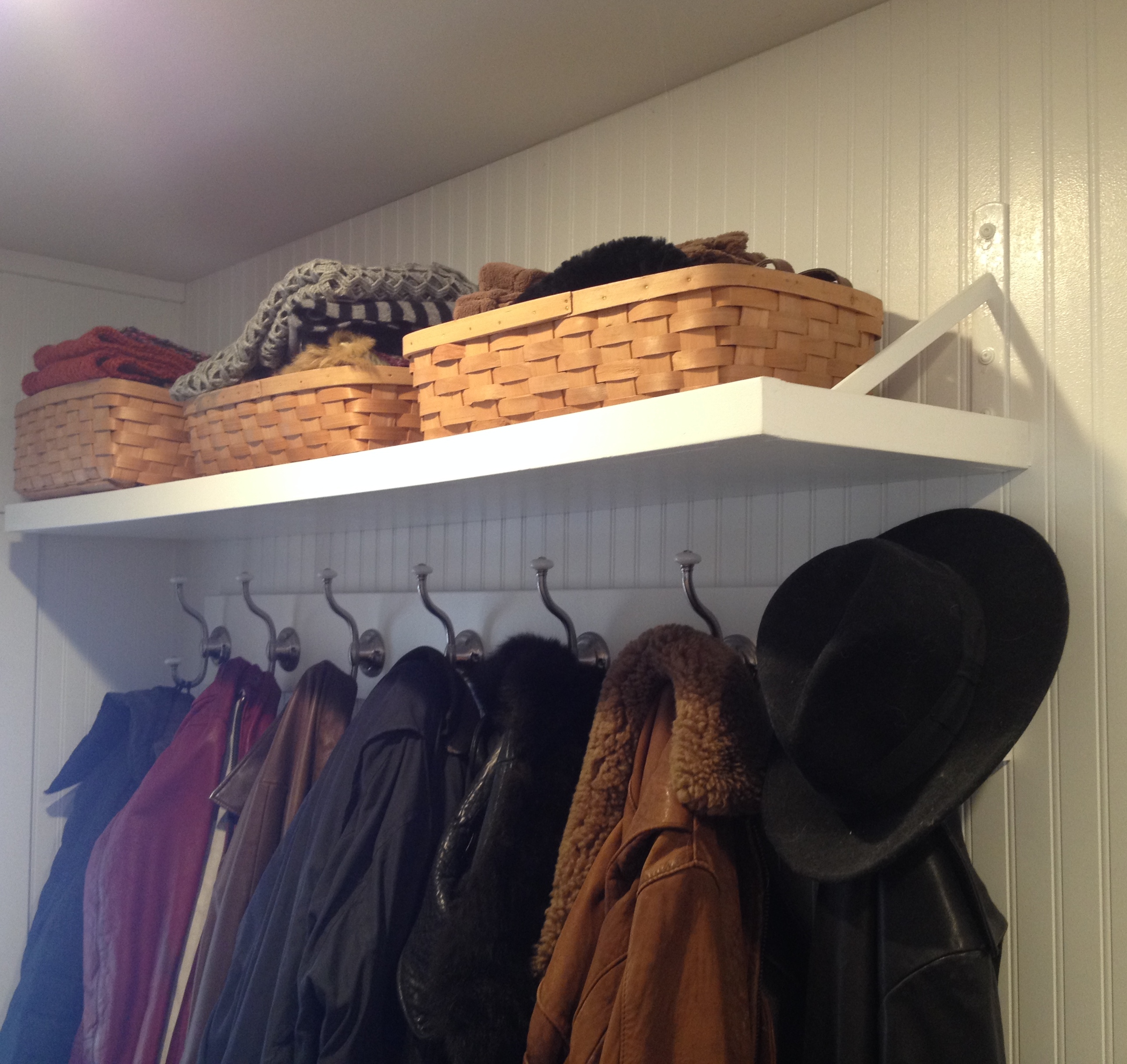
In my house what goes into baskets is extensive: scarves and gloves on an upper shelf in the mud room–called an “Alaska room” in the Pacific Northwest. Hats in a wall-hung basket. Two large baskets contain gifts ready for giving when the occasions roll around. I store stationery,  greeting cards, and candles in baskets. Folded dining linens in baskets. In bathrooms, extra hand towels are rolled into a wire basket, and a collection of European soaps in another.

The list goes on and on, and with that I need to confess to a few little hoarding habits of my own. Nothing compared to Mr. Yourgrau’s stuff, but still… I “collect,” as I like to call it, “affordable luxuries,” all of which are stored in baskets. Oh, and in the process I collect baskets.

“Finders need keepers,” states House Beautiful’s Sensational Storage Solutions. Marie Kondo, the Japanese cleaning consultant and author of The Life-Changing Magic of Tidying Up, would disagree. “A booby trap lies within the term ‘storage,'” she writes. Purging of belongings is Ms. Kondo’s modus operandi.

Mr. Yourgrau, on the other hand, author of Mess, accumulated everything of meaning, and if it didn’t have any, he gave it meaning. What began with gathering mementos such as cocktail napkins and coasters from well-loved restaurant experiences around the world, degenerated into hoarding plastic bags and cardboard boxes in his apartment in Queens.

“I looked like a storage help center,” he said on interview with NPR. “I thought they’d be useful when I eventually sort of tidied up my place.”

It can be a slippery slope. I confess to keeping packing peanuts for reuse as well as folded sheets of bubble packing plastic for the shipping of gifts. I keep them in baskets of course, out in the garage. Mr. Yourgrau lives in NYC and doesn’t have a garage. I don’t know what I’d do there; I would have to change my ways.

And seriously, Ms. Kondo, would you send me out for supplies each time I had to ship a gift? Perhaps your family lives within walking distance in Tokyo, but my family is all over the map.

Although Mr. Yourgrau has tidied up his place tremendously, his display of miscellany from table to table as seen in “A Hoarder’s Tale of Redemption,” The New York Times August 19, looks to me like Ye Olde Curiousity Shop down on Pier 54 in Seattle.

What started on an island for me, a passion for baskets, finds itself on an island once again. All my favorite things, close at hand yet out of sight. Call me a basketcase, but it’s working.

4 Comments

Filed under hoarding

Oh, Canada!

Grand Waltz at Homfray Lodge

By KIMBERLY MAYER

As I write, we have gone to sea. All our cares stay on land when we go. It works every time. The sea is its own reality. This summer has been characterized by inordinate heat, drought, and wildfires in the Pacific Northwest. Living on a boat surrounded by water has a calming effect.

We are retracing much of last year’s voyage to Desolation Sound with my sister and brother-in- law.

At 6am sharp, we shoved off from Roche Harbor, Washington. Cleared customs on South Pender Island, never knowing what fruit they are going to confiscate, this time it was eggs. Twenty eggs. We could stay and hard boil them and take them with us, but we wanted to make it in time for passing through Dodd Narrows during slack tide. No time to boil eggs.

In Nanaimo the first night, a busted water hose was discovered and repaired. But when we reached Lund, the last stop before Desolation Sound, something really went wrong. This has happened before on other extended boating trips, so we knew what it was: a migraine. I had O.D.’ed on light in BC Canada yet again.

It was a day I have nearly lost recollection of, but lying in the darkened bunk I had nothing but empathy for my father who at 92 has undergone more medical procedures than humanly possible. I felt inside his body. And the hauntingly beautiful sound of the bagpiper who plays an ode to every sunset at Lund, bringing the sun down with her pipes. That mournful sound became a part of me. But when I heard my brother-in-law’s voice on deck, outside my bunk–clearly it was another South African– “You’ve come,” I cried. “You found us!”

In my delirium I lost a whole day. And wound up that night in the ER for dehydration. Luckily we were near Powell River where there is a hospital, before we had slipped into Desolation Sound where there would be none.

That night, a young physician and nurse were on duty. Both were refugees from the exorbitant cost of living in Vancouver and had come to Powell River to live. Arriving just two months ago, the nurse has already purchased a home she adores, just steps from the beach, “a house for $250,000 that would have cost 4 million in Vancouever.” The physician, a waterfront lot upon which he will build. She’s got her kayak coming and is looking to add a small sailboat to her fleet, “just to explore around.” The physician loves to fish. They will do fine.

With each sweet drip of saline solution in my arm, I was coming alive and began recommending books to the nurse. Books with a sense of place to her new homeland: A Tale for the Time Being, by Ruth Ozeki and The Curve of Time, by Muriel Wylie Blanchet. She wrote them both down and promised to read them. And I promised to wear darker sunglasses. Stay under the Tilley’s hat my sister gave me, and not substitute it for a straw hat no matter how warm. Stay beneath the bimini on the boat, and drink water water water from dawn to dusk.

Map of Desolation

Now onward and upward to Desolation Sound

Canadians know this well, we move through people’s lives and can act pleasant and say thanks where thanks is due. It was the physician, the nurse and taxi cab driver that night for me. But when we can recommend books that we think will mean as much to them, we have really given them something. Reading by the fire in the darkness of her house in the woods at night, she will look up and thank me. I just know it. Readers are a tribe; we recognize each other.

The physician? Naw, he’s a fisherman

7 Comments

Filed under Uncategorized

Pleasure Grounds

By KIMBERLY MAYER


In my last post it was one step forward, two steps back with the deer ones eating nearly all my plantings, and in the process of watering those plants, thistle grew. An insidious, obnoxious weed.

Sometimes it’s two steps forward, one step back.

And every now and then, a leap. My theory is that if we weren’t plugging away step by step, we would never reach the ledge where we can jump like that. Leaps are what we live for, after all.

I had been blogging on remodeling for a year before I realized I hadn’t included any “before” and “after” photos, which must be the bread and butter of remodeling blogs. So here it goes:

Back yarrd before

our scrappy lot when we moved in

Stumps and picnic table with view

the Pacific Northwest pleasure grounds it is now.

This is where we weeded, framed the areas, and put down a weed barrier underlayment. Where we carried gravel in 5 gallon buckets, one in each hand for balance, from the driveway where the truck had dumped the load, down a long flight of stairs to empty on the underlayment. Three days of doing this, four yards of gravel. My husband’s FitBit read 12 miles each day. We have a friend on island who sent her gravel downhill by constructing a chute out of tarp. In our case it was a staircase, and so we had to carry.

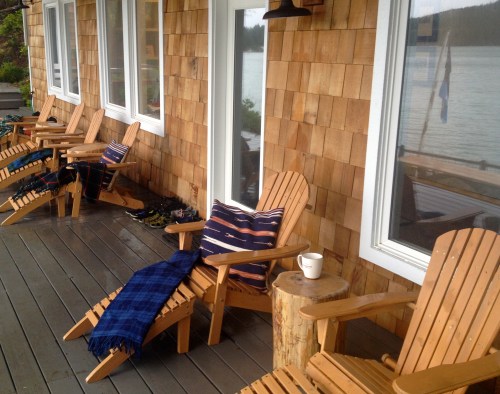
This is where we dine on an oversized Western red cedar table made by our friend Bill Maas at Egglake Sawmill & Shake. Where we will sit around bonfires at night whenever the drought ends, and otherwise just sit around. Where we wrap ourselves in Pendleton wool throws at night and place our beer or wine or Moscow mule glasses on cedar stump tables beside each chair.

The cedar stumps too came from Egglake Sawmill & Shake, rough with bark. First the edges were routed to create a smooth bevel at the rim and base, then the bark was peeled, and the stumps were sanded–first with a belt-sander, then fine sanding. Finally, multiple coats of a clear polyurethane coating, and when dry, they were good to go.

Stumps on deck

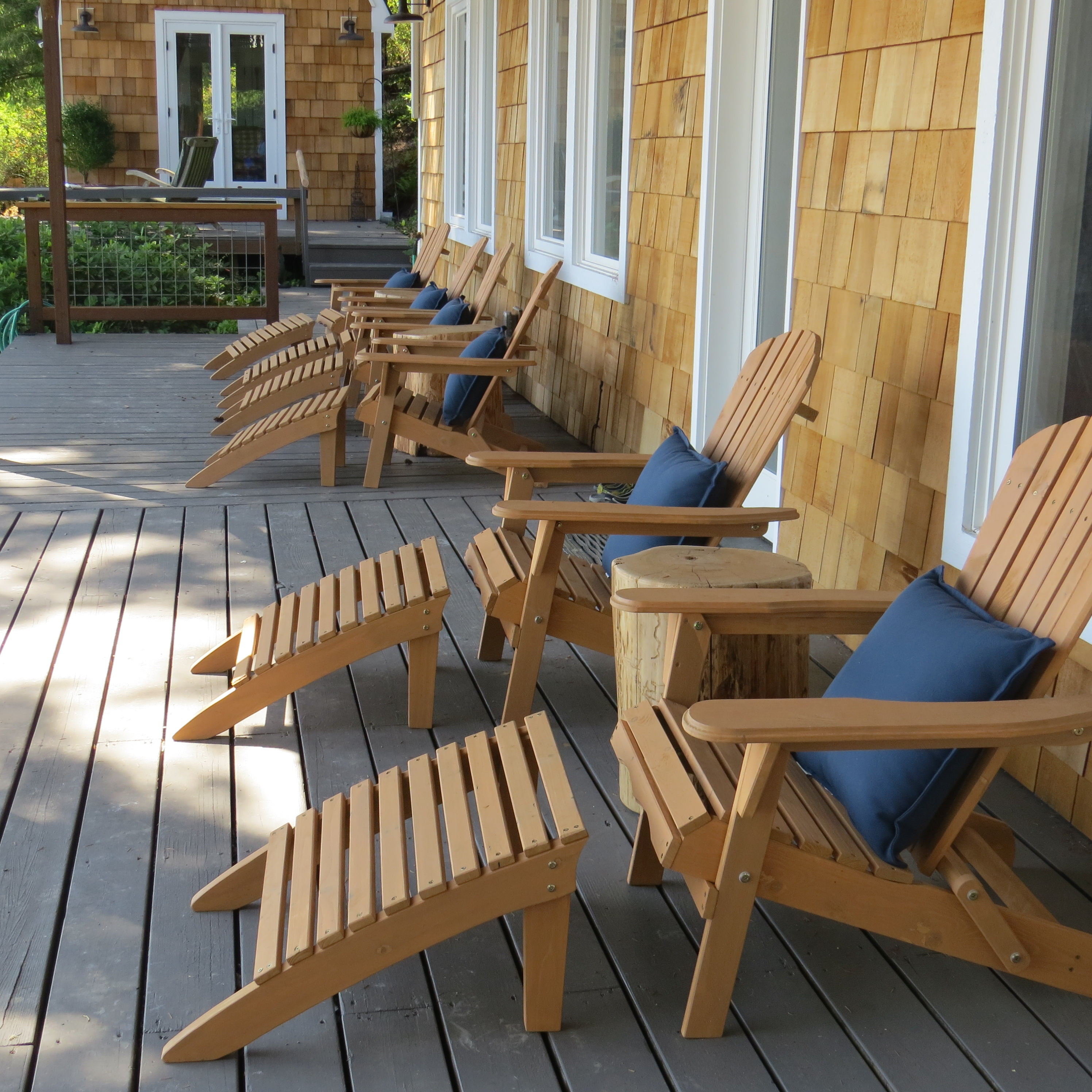
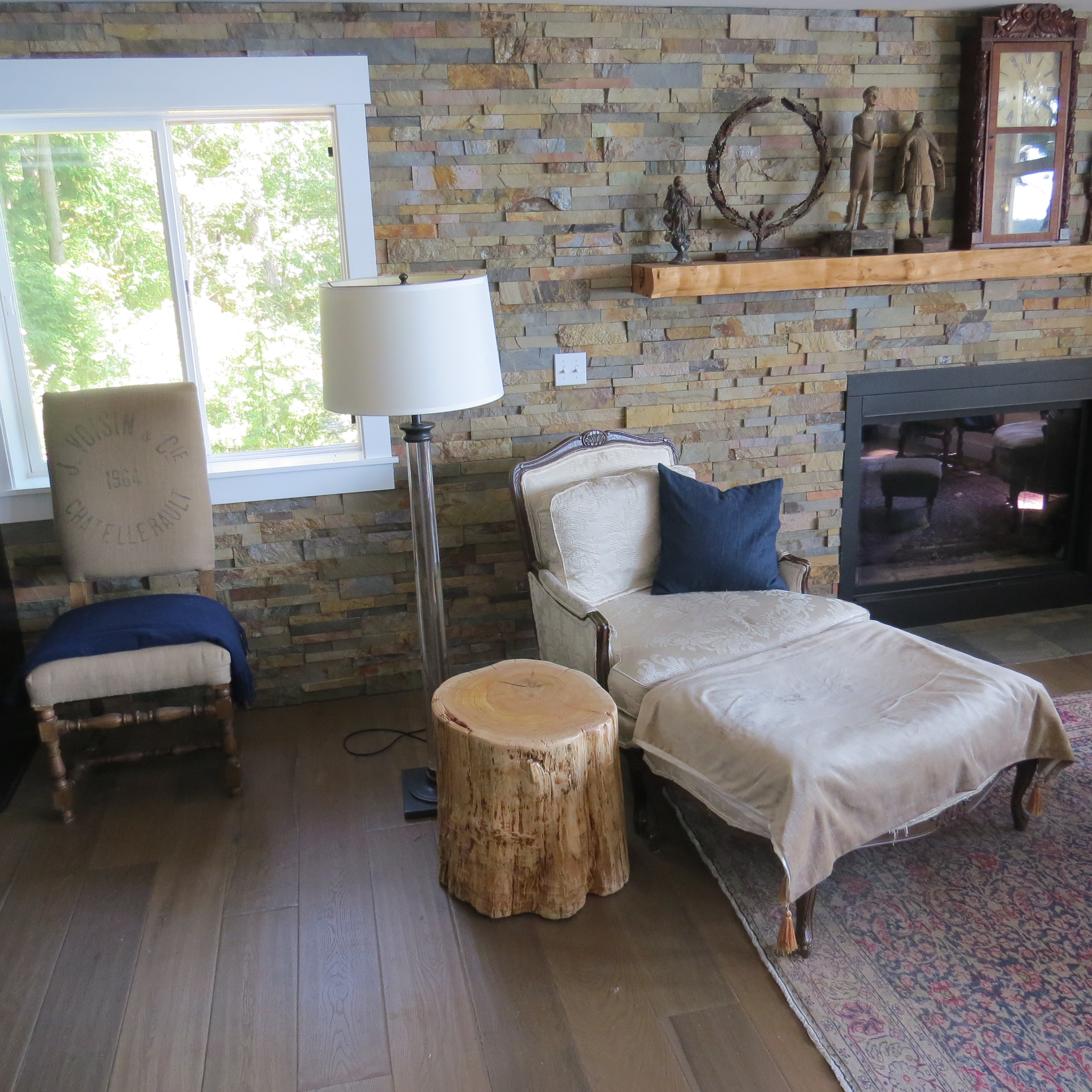
There were eight stumps in total. Four around the fire, three on a deck between Adirondack chairs there too, and one was so grand in size and particularly good looking, I placed it in the living room. My thinking now is that every French bergère chair should have a rustic cedar stump beside it.

Stump in living room

So what if it slants a little?

Outside again, this is where we have every intention to play bocce ball—once we get the right material in the court and compact it with a lawn roller and do everything right. For a premium surface—where the balls roll fast, track straight, and absorb bounce–building a bocce ball court is much like constructing, and maintaining, a Japanese Zen garden. In the end it is covered with crushed oyster shells and dusted with “oyster flour” made from pulverized oyster shells, for proper texture and drainage.*

Who knew?

What a difference a year makes. In Seattle it was all about fine dining, theatre, and literary readings. In the islands, crab boils upon picnic tables, gravel, and oyster flour.

*Note: Ours will be less than perfect. Paul calls it a drunken bocce ball court because it is not completely level.


4 Comments

Filed under pleasure grounds

The State of the Garden

Thistle

BY KIMBERLY MAYER

The state of the garden is, more or less, just grounds. After a great deal of planning, digging, planting, watering, and anticipation, we are pretty much back to what we had in the first place. A lot by the sea in an old growth forest that had always gone its own way and done what it wanted. I never meant to disturb that; I had only hoped to add a little color.

Sometimes it’s one step forward, two steps back…

After doing my research I put in plants that were both deer-resistant and drought-resistant. (There’s a reason they call it “resistant” rather than “proof.”) This year tested us on both fronts. A long dry spring followed by an exceptionally warm summer, by Pacific Northwest standards, and more Bambis than ever being born perhaps? I don’t know, but I do know that every spring they will be born, and something came along and one by one, beheaded all the blossoms and devoured most of the plants. A hillside of Lupine, Wallflower, Wild Rose, Coneflower and Iceland Poppy.

Our theory is that, as with humans, taste is acquired. The Bambis have no idea yet what the deer ones like to eat and don’t like to eat. And my watering daily in this exceptionally warm climate to help new plantings get established only succeeded in establishing noxious weeds.

It’s like Risky Business around here, with thistles having a hay day.

You might say the state of the grounds now is primarily thistle. Prickly, like the jumping cholla cactus that leaps onto you as you brush by in the desert. Invasive, capable of growing to great height, with roots that extend deep in the soil and spread wide. Break a root trying to pull a thistle plant up, and multiple new thistle plants are likely to sprout.

Who knew all the trouble one could get into on a half-acre lot? If only I had left it alone….

But to be fair, the deer ones are allowing me some plants for which I am grateful: rhododendron, lavender, rosemary, and Shasta daisy. “Why, it is going to be a standing ovation of Shasta daisy along the fence!” I’ve been heard to exclaim.

And that is what I like most about gardening: the eternal optimism.

4 Comments

Filed under gardening with deer and drought

Rhoda and I

Give me an open shelf and I immediately go into display mode. From the pragmatic to the aesthetic–whether we’re talking everyday dishes or a collection of shells–in my mind they occupy the same sacred space. A well-arranged shelf is like music to me. Where did this come from?

Ah yes, Rhoda.

Not since The Mouseketeers had I been so enamored with a television show. From 1974 to 1978, for the life of the show, I didn’t sit there with my ears on but I was hooked. Rhoda was at first a backstory of The Mary Tyler Moore Show and later a spin-off. She had all the right ingredients and captured my imagination in a way that Mary hadn’t. Unlike Mary, Rhoda wasn’t perfect. She had issues. She had verve. And Rhoda was a window dresser. Having moved from Minneapolis back to NYC at the start of her own show, Rhoda called out, “New York, this is your last chance.”

I was working as Communications Editor for G. Fox & Co., a large department store at the time in Hartford, Connecticut. My first gig out of college, editor of in-house publications. Unlike Mary, who was tied to her desk, I had the freedom to roam between departments with paper & pen and camera, attending events, getting stories, and becoming acquainted with both employees and management. And in all the world of G. Fox & Co., I considered the Visual Merchandising team the most creative bunch—far more creative than my department, or even advertising.

Inspired by my new arty friends, the window dressers, I rented a trendy loft space in a beautiful old building enjoying a renaissance at the time near Union Station in Hartford—an area undergoing a major effort in urban renewal. My high- ceilinged, light-flooded space was a blank canvas for all that I would do. A massive store window, if you will. I think I got as far as rolling in a wooden spool for a table, my first piece of furniture ever, to start my life around.

Rhoda married Joe. Then love bumped me off course too, and the next thing I knew I quit my job, left Hartford, lost my security deposit and first month’s rent on that loft, left my first piece of furniture behind, flew to St. Thomas USVI for a couple of years, and… we won’t go into it.

Let’s just say I should have stayed, kept writing, and set my stage. Two things that make me immeasurably happy.

Rhoda’s marriage to Joe fell apart too. The ratings plunged. Joe was the owner of a wrecking company, and my ex-husband might as well have been too. In any case we pulled ourselves up through design, Rhoda and I.

“What is design but the creation of orderliness?” states Mary Douglas Drysdale.

Today my blue & whites are in a hutch. Like things together, that seems to work.

Bookcase 3

A major bookcase is color- blocked like a Mondrian painting. When I’m watching a game and my attention wanders, it is most likely up to the books.

IMG_4562

In the master bath, a shell collection sits on pine shelves that once held Costco-sized spices, sea salt, pepper mill, olive oil and vinegars in a kitchen in Pennsylvania.

IMG_4560IMG_4557

In the kitchen today, much of what was once hidden in upper cabinets is now out. Stainless steel kitchen shelves hold all our white every day china and clear glasses. The idea is that what is used frequently, doesn’t get dusty. And as cooks in prepping we experience extraordinary head and shoulder space.

Live with what you use and what you love. And get rid of the rest.

Yep, I can see Rhoda winking at that.


4 Comments

Filed under display, visual merchandising