In a perfect world, where animals live life to the full, cows are devoted mothers and have best friends for life. Their lifespan may be 20 years. Donkeys will defend their herd at their own risk and may live for 50 years. Sheep live for 12-15 years, with the ability to read people’s facial expressions and recognize up to 50 faces. Chickens too. With better vision than humans, ducks remember faces and voices. Goats choose to interact more with happy faces in people and live for 14 years.
Mama pigs hum to their babies. Chickens put themselves to bed exactly at dusk and need eight hours of sleep much like us. Ducks synchronize their hatching by communicating with each other in the eggs. Geese mate for life, and if one goose is injured another goose stays with him.
But our world is far from perfect, particularly for animals. In production dairy facilities cows live most of their lives standing in their own waste in stalls hooked up to industrial milking equipment, only to be killed after four years when they can’t produce enough milk. Cows raised for beef are killed before they are three years old, sooner if designated for veal. Lamb meat is procured from sheep under a year old, and goats are killed by 5 months for their meat.
No federal laws at all protect ducks or geese from inhumane slaughter, and according to World Animal Protection chickens are one of the most abused animals on earth. Production laying hens spend their lives in cages so small there is no room to turn around. Chickens raised for meat are killed at 6-8 weeks old after being fed unnatural diets to gain weight quickly. Often they cannot stand. There are more chickens than people in the world, and these are their conditions. The facts speak for themselves. This is not a loving planet for factory farm animals.
Then along comes an individual with a vision for a nonprofit animal retirement sanctuary, a final stop for retired farm animals and rescued animals, many from Pasado’s Safe Haven in Washington. Karen Clark Cole set aside five idyllic acres of woods, ponds, and pastures, barns, coops, sties, and stables on San Juan Island for Heaven on Earth. Where the climate is temperate and veterinarians make house calls. All the comfort and freedom they need to live their best lives at last.
Walking the grounds with Karen, she pointed out chairs placed about where she likes to sit with the animals and learn their language. Visitors are invited to be with the animals as well. I make note to return when visiting hours open in May, and in the meantime eat less meat.
Originally published January 14, 2026 in The Journal of The San Juan Islands
October 18th marked the largest single day of protest in U.S. history. Comprising a network of progressive organizations, No Kings’s organized 2,600 peaceful protests in nearly all states–people exercising their constitutional rights, reminding the world our country was founded in opposition to monarchy.
More than 7 million people participated in No Kings Day nationally. And on a little island in the middle of nowhere with a year-round population of 7,500, an astonishing 1,000 people of all ages assembled. It seemed everyone on San Juan Island was there, assembling at noon on the courthouse lawn then parading through town. Any passerby would note the flag on our side, creativity in homemade signs, and delightful frivolity in costumes, a far cry from House Speaker Mike Johnson’s characterization of our protests as “hate America rallies.”
Parading alongside an inflated dinosaur, a pair of chipmunks, unicorns, an eagle, orcas, and a furry fox, it’s no wonder I heard Dr. Seuss’s Horton Hears a Who in my head! For anyone not acquainted with the beloved children’s book, the story is of an elephant named Horton who, because of his enormous ears, is capable of hearing what no one else could: a small voice in a speck of dust. Which turned out to be all the Who’s in Who-ville where every voice counts.
He looked and he looked. He could see nothing there
But a small speck of dust blowing past through the air.
“I say!” murmured Horton. “I’ve never heard tell
Of a small speck of dust that is able to yell.”
“And, all over Who-ville, they whooped up a racket.
“We are here! We are here! We are here!” they cried.
“You mean…” Horton gasped
“You have buildings there, too?”
“Oh yes,” piped the voice. “We most certainly do….
I know,” called the voice, “I’m too small to be seen
But I’m the Mayor of a town that is friendly and clean.
Our buildings, to you, would seem terribly small
But to us, who aren’t big, they are wonderfully tall.
My town is called Who-ville, for I am a Who
And we Whos are all thankful and grateful to you.”
“Mr. Mayor! Mr. Mayor!” Horton called.
“You’ve got to prove now that you really are there!
So call a big meeting. Get everyone out.
Make every Who holler! Make every Who shout!”
“We are here! We are here! We are here!”
Originally published November 19, 2025 in The Journal of the San Juan Islands
Out on the slim peninsula between Westcott Bay and Mosquito Pass, Barb Fagan and I came calling. An Australian Sheepdog named Joey came running, and a man with a full white beard looking like David Letterman strolled down the drive to open the gate for us. Silver birch line the driveway, trees that he planted years ago. Barb was introducing me to Chet Genther. They are both members of the San Juan Island Garden Club, and it crossed my mind that I may be the only islander not familiar with him.
“I joined the Garden Club to learn to grow flowers,” he said with a smile. For Chet is a food gardener through and through. From the sanctuary for wild roses which it was, to now, every bit of his arable land is tended. “I wanted a farm,” explained Chet, “but one acre is plenty.” Plenty enough for an orchard of apples, plums, Bartlett pear, Asian pear, and crops of cantaloupe, watermelon, sweet potato, red beets, table grapes, 13 varieties of tomatoes, Marionberries, blue berries, raspberries, and strawberries as ground cover.
A Valencia orange tree which began in a solar room in Redmond, Washington has reached maturity on island under a heat lamp in the greenhouse. Orange trees self-pollinate in a breeze, so a fan simulates trade winds. Braeburn apples grow in bunches like grapes, their weight on branches considerable. “I can’t store what I can grow,” notes Chet. Thus crops of whole trees regularly go to The Friday Harbor Food Bank. There’s a generosity to Chet’ s every step. Even his bushy white beard growth is slated for playing a Santa at Nordstrom in Bellevue over the holidays.
Barb and I had the privilege of stepping into one man’s garden. We bade goodbye, our arms laden with produce. Remembering that Chet had joined the San Juan Island Garden Club to learn to grow flowers, I had to ask Barb, did we see any flowers? She laughed. Not the right time of year of course for blooms, but it may also be that it’s fruit trees that keep flowering in this bit of paradise.
Originally published October 8, 2025 in The Journal of the San Juan Islands
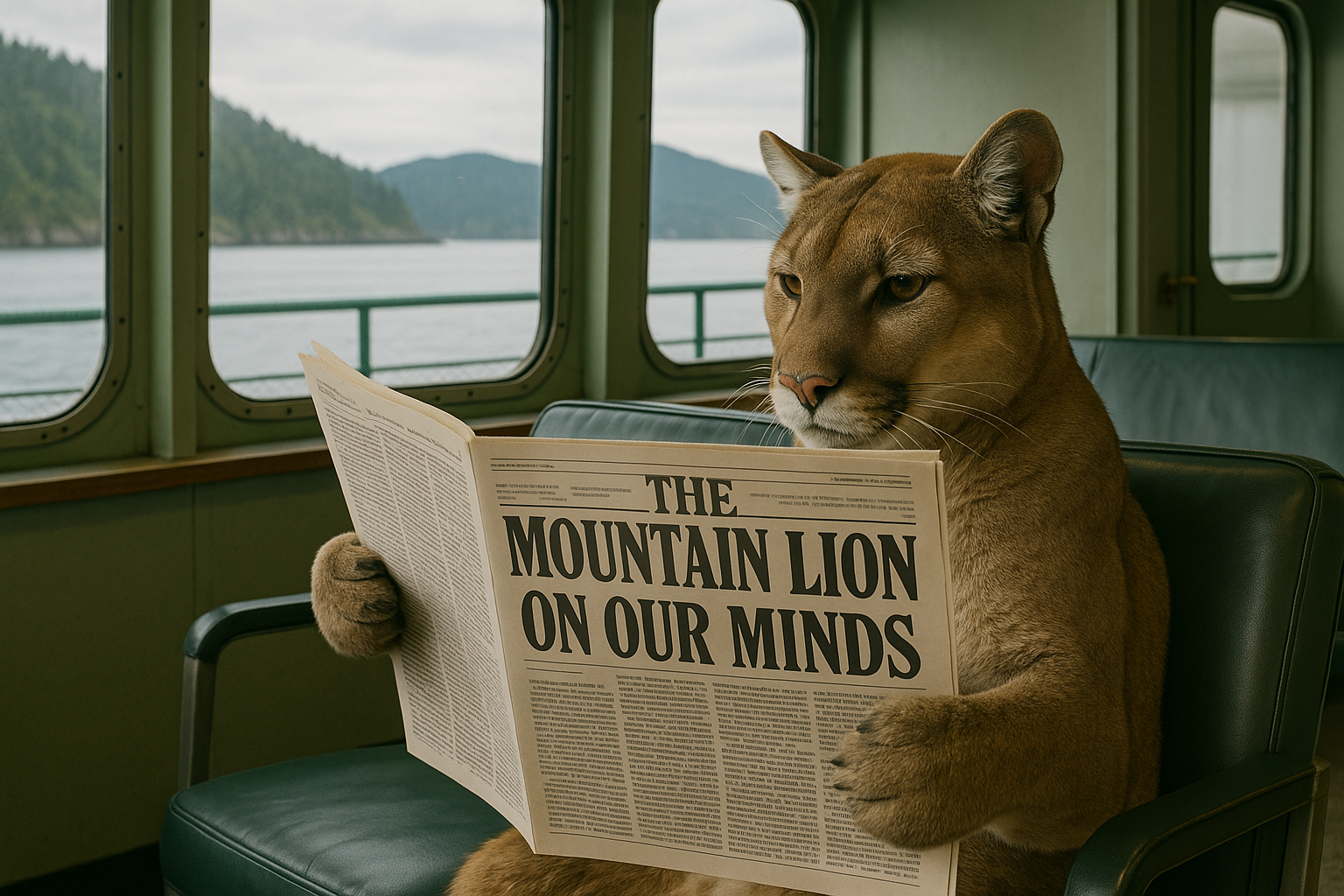
Just a few months ago my book group sat down to discuss A Tale for the Time Being by Ruth Ozeki, a writer who lives on Cortes Island, B.C. amidst bears, wolves, and mountain lions. I remember exclaiming to the group how very fortunate we are not to have large predators on San Juan Island. That was in May. By August 4th we had a mountain lion.
Islanders tend to keep track of things. Seasons are marked by what fish is running: salmon, halibut, or lingcod. Spot prawns, crabbing, and hunting seasons. Birders track birds to identify species, estimate numbers, and note migration patterns. And we track whales to better understand the Southern Resident Orca and to aid in recovery efforts. We have a sense of what belongs here and what doesn’t.
Not for a long time have large predators stalked the San Juan Islands. A few years back a lone black bear swam across the channel and went island hopping: Camano Island, Whidbey, Fidalgo, Orcas, and Shaw, finally arriving on San Juan Island for a long weekend. Then he was on his way again, but not without having turned us all a bit upside down. Now a cat is doing that.
With just two or three unverified sightings under his belt the mountain lion is free to roam anywhere and everywhere on island–mainly into our subconscious. Our collective subconscious. I’m not saying the mountain lion isn’t real, but it does have us all off balance.
Our community Facebook group, What’s Up Friday Harbor, is loaded with reports of mountain lion screams in the hills at night. People post scat photos to track his whereabouts, but few of us know what mountain lion scat looks like. Indeed, the mountain lion could be hiding anywhere in plain sight. Maybe it’s the time of year, but everything on island appears to be in his color palette: sand, woody debris, leaf litter. Golden grasses in prairies look remarkably like a savannah. Soon we’ll start seeing eyes in trees. This is how it starts.
Mass hysteria is a phenomena that transmits collective illusions of threats, real or imaginary, through a population and society as a result of rumors or fear. The Salem Witch Trials fit the bill, as did Hammersmith Ghost Hysteria (1803) when stories of a ghost circulated in a neighborhood in west London. Panic was so widespread, residents took up guns. On another note, a laughter epidemic broke out in a boarding school in Kashasha, Tanzania in 1962—forcing closure of the school. The Seattle Windshield Pitting Epidemic of 1954 became a textbook case of collective delusion. And people may remember the Great Clown Panic of 2016 that swept the US, Canada, and numerous countries like a contagion.
But given our mountain lion on island, the best story is of a convent in France in the Middle Ages in which a nun inexplicably began to meow like a cat. Other nuns joined in and soon all the nuns in the convent meowed loudly, much to the distress of the surrounding community. Studying the medieval meowing convent, Swiss physician and philosopher Johann Georg Zimmerman noted “the influence of solitude on the mind.”
Both convents and islands are isolating. The good news is that while collective delusions spread rapidly, they tend to be short lived. Of course none of this has anything to do with our mountain lion on island, who may very well be real.
Meow.
Originally published September 17, 2025 in The Journal of the San Juan Islands
Every now and then I’ll be out walking the loop by Roche Harbor, minding my business, when a lady in a shiny golf cart whizzes past me, and with a particular wave of her hand an entire scenario opens up, unfolds, and I fall through. I might be thinking something unfathomable or confounding, and she goes by so gladly. My imaginary mother is on island.
I’m pretty sure we all thought mom would outlive dad. Something in her just didn’t age. So it made sense that we thought perhaps someday she’d come live with us. And to coax her out of driving, we’d get her a golf cart and urge her to stay local.
But now that my imaginary mother has come to live with us, “gallivanting about” as she says, is fun again. Jumping into her buggy she picks up mail at the post office on the wharf, shops for groceries, browses boutiques, or meets new friends for lunch at Madrona Bar & Grill or Lime Kiln Cafe. Like me walking, mom notices the Queen Anne’s Lace just appearing, the deer crossing, and fox going in and out of culverts by the side of the road. In my mind she’s in heaven here. In her mind she’s probably on Martha’s Vineyard.
Mom came to San Juan Island from Cape Cod and Duxbury, Mass. From Talbots and L.L. Bean to Pendleton and REI it’s not that much of a stretch. As well as living off the sea as much as can be. She arrived a lover of raw oysters, although we had to get her off red cocktail sauce and onto our mignonette sauce as an accompaniment.
As it happened, mom’s niece had worked with Erin French at The Lost Kitchen in Freedom, Maine. A little known gem of a restaurant until Martha Stewart strolled in one day, and the next thing you knew The Lost Kitchen appeared as a story in her magazine, Martha Stewart Living. But we didn’t need to wait for Martha, as my cousin Margot was in the kitchen with Erin, and gave us tips on what they called Oyster Hogwash Sauce at The Lost Kitchen. It’s as fine a mignonette with oysters as we know.
Oyster Hogwash Sauce
¼ c. unseasoned rice vinegar
¼ c. seasoned vinegar
1 large shallot, peeled and minced
1 large jalapeno pepper, seeded and minced
½ bunch fresh cilantro, freshly chopped
Juice of one lime
Combine all ingredients in a bowl, stir and serve alongside freshly shucked oysters.
Note: Margot notes that while shallots and vinegar are the base, cilantro and lime aren’t always a part of it. Instead of lime juice, “We often add plums or whatever fruit is in season. Exploration is the key. Sometimes it’s cucumbers, sometimes blueberries. Sometimes juice, sometimes just the fruit, there is not a fixed way. Brines are different, seasons are different, so it’s always about the present moment.”
Originally published August 13, 2025 in The Journal of The San Juan Islands
Years ago I read that shortly after a telephone conversation with Katherine Hepburn, who was at her seaside home in Old Saybrook, Connecticut at the time, Spencer Tracy became aware of a hurricane barreling up the Eastern seaboard, heading right for Old Saybrook. “But she never even mentioned it!” he exclaimed.
I am much the same way. I didn’t bring up our recent storms either. Long distance people had to ask, and I downplayed it. “We’re accustomed to winds,” I said, “and our trees are accustomed to winds.” But between us, it really was something. And not all trees stood.
One storm was a bomb cyclone, and the other, an atmospheric river. Unlike hurricanes, they have no names—we save names for earthquakes and wildfires out west. In any case, last month we experienced one right after the other. Everything all at once it seemed. Nearby Vancouver Island tracked gusts of 101 mph–the speed of a Catagory 2 hurricane. In Seattle the National Weather Station was damaged by high winds, while falling trees struck homes, a homeless encampment in Lynnwood, a King County Metro bus, and pulled down power lines all around the metropolitan area.
I rode the storms out in my home on San Juan Island, wifi down, flashlights and candles at the ready. For what seemed like weeks I stood at the windows and witnessed the world whited out and erased. Wind and rain, wind and rain. Normally we can determine wind direction by the waves, but we couldn’t even see the bay. Everything vanished.
And yet we never lost power on San Juan Island. Be it the number of underground wires or the confluence of surrounding mountains, we were spared any outages through the two monster storms. I’m thinking we’re in a protected bubble here.
Pinecones can slam against glass windows and batter the decks all they want—it’s just a lot of noise.
Hold that thought. Keep it in mind as we look to the next four years. While trying to console me after the election, my daughter suggested “You’re in a good place, mom. Trump doesn’t even know about the San Juan Islands. He has no idea any of you are there.”
Originally published January 1, 2025 in The Journal of the San Juan Islands
What drove me away from the islands in December was the darkness. Now, three months later in San Diego, I am almost ruined. All that light! Even in the historic rainfall this winter, bomb cyclones or atmospheric rivers–call it what you will–there was light. And I got used to that.
Now we leave SoCal, the land of shiny white cars, and drive up the coast, traverse Oregon, the land of trucks, and all of Washington, the land of gray SUV’s. Enormous states all. Finally, ferrying out to what our five-year old grandson refers to as “going to that other country…”
I think that’s what breaks my heart.
I had thought we’d be returning to the island with the rufous hummingbirds, coming up from southern US and Mexico at the same time as them. In my mind’s eye salmonberry and red flowering current would be abloom for our feisty little friends, and we would start being their handmaidens, crazily filling their feeders. Bags of sugar flying off the grocer’s shelf like it was days before Thanksgiving. Kayaks and paddle boards coming and going, revolving doors of houseguests, and every meal on the deck. I saw all this, with spring accelerating into summer.
But there’s more winter to get through apparently. Our route will be more coastal, but still, a Monster Blizzard in the Sierras. Snowfall on island. We’re packing snow chains for the road trip. But it was never about snow; it was the lack of light. Snow is beautiful. And it’s bright.
If there’s one thing we can’t predict, it’s nature. Winter or spring, we’re coming home. To the woods by the sea where Douglas firs and cedars stand and greet us, and madrone trees bend and beckon with open arms.
A writer’s life is like this. She grows a set of antennae as she goes into the world, looking for material. Lately I’m wearing two sets of antennas, one for this blog and one for a new column in the Journal of the San Juan Islands. I don’t know what the difference will be in terms of what I will see and what I will write for either outlet. I do know, however, that while blogging can be irregular, I will have to be regular with the monthly newspaper column.
I’ve titled it “The Nature of Things,” to keep it broad. My new hero in life is Eleanor Roosevelt. A woman for all seasons, all reasons, and now this: her dedication as a columnist. For nearly thirty years, six days a week, Eleanor Roosevelt wrote “My Day,” a nationally syndicated column reaching millions. How did I not know this when I was young and reading only comics and “Dear Abby” in the newspaper? Why was I not guided to “My Day”? I feel I am having to make up for lost time as a child.
More liberal than her husband, Eleanor considered herself a journalist first. She wrote past FDR’s presidency, through the Truman administration, the Eisenhower administration, and into the Kennedy administration. Indeed Eleanor Roosevelt didn’t put down her pen until two months before her own death in 1962. Her column covered everything, from everyday occurrences in the White House to nature and conservation, art, labor reform, civil rights, women’s rights, anti-Semitism, and the threat of fascism.
Today we have all that plus a planet in peril. My column, “The Nature of Things” appeared for the first time in The Journal of the San Juan Islands this month, and what did I cover but runner beans, rolled hay, and Breton striped sweaters. It was a start.
It was the only time I ever remember dreading going into town, Friday Harbor, on San Juan Island. County seat to San Juan County, and a major commercial center of the San Juan Island archipelago. Still, it’s a small town. Centered on Spring Street, steps up from the waterfront, the ferry terminal, the Marina, and Fairweather Park where carvings honor the island’s Northwest Coast Indian heritage. And where musicians play in summer.
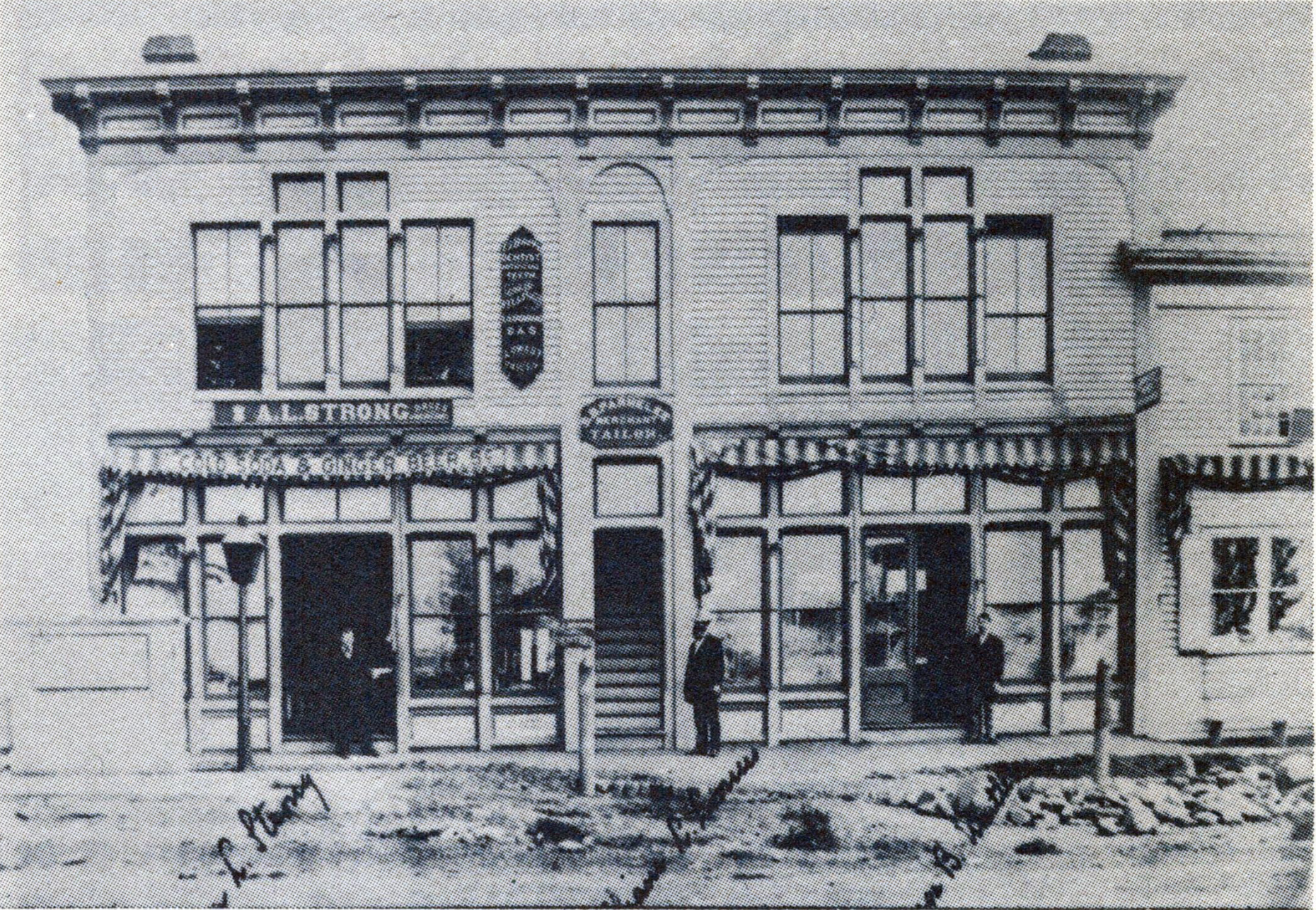
There was no music now. On April 7th a fire blazed in the night, and although the fire had been extinguished for a couple of days, that block on Spring Street was still sectioned off with emergency vehicles and yellow tape. The fire had caused extensive damage to six iconic historic buildings—some a total loss–two buildings dating back to the 1880’s.
Standing across the street and up a block, I hated to look. It hurt to look then and it hurts to think about it now. The agony of seeing what isn’t there anymore. I hadn’t yet fathomed the interior loss and the loss of livelihoods: a popular tavern, a coffee shop, a real estate office, and a kayaking tour company. Furthermore all of these buildings had had other incarnations through the ages: hotels, grocers, saloon, barbershop, and a silent movie house among them.
Standing there, I was feeling it architecturally in that moment. My first thought was how can this ever be rebuilt without looking like Disneyland? Like Whistler? As Sandy Strehlou, Historic Preservation Coordinator for the town of Friday Harbor said, “The impact on the historical district is irreplaceable.”
Later I determined that the fire in Friday Harbor was causing something not unlike PTSD in me, triggering memories of the town where I had grown up. A small town in northern Connecticut, Suffield prided itself on its Historic District running the 2 ½ mile length through the center of town. 18th and 19th century homes lined North and South Main Street, with the town center and a village green. A Town Hall, Masonic Lodge, bank, fire station, a grocer, pharmacy, luncheonette, and various shops comprised the old town center. I always thought the center comfortable with itself. Everything much as you would expect if this were a predictable story, or a stage set for a play. Every bit as archetypal then as Friday Harbor, my western town now.
The old town center on Main Street, Suffield CT
And then the most incongruous thing happened—entirely off-plot. These were going away to school years for me, so I wasn’t paying close attention. It seemed to me that on one visit home the town center was there, as always, and on the next visit it was not. It was almost like the center disappeared.
In Friday Harbor a rogue arsonist torched the town on April 7th. In Suffield Connecticut, the town center was demolished by committee in the 1960’s. Bulldozers and wrecking balls right through the heart of the town. I will never understand how it happened.
A suburban shopping center was then constructed in its stead, off the site–not in The Historical District. “Suffield Village” is how they refer to it. Some entries are from the outside, some inside, like a small mall. Initially it tried to hold the businesses from town, but now it’s mostly offices and a lot of empty spaces. As a friend in Suffield notes, “Businesses failed and the building went into some disrepair. It’s just not anything special.” All the parking in the world, and no one wants to go there. (Name a nice town that doesn’t have a parking problem).
The original Suffield Town Center had good bones and charm. It was nothing that fresh paint, new awnings, parking meters, and love wouldn’t fix.
Islanders know this with every ounce of their being. Love for Friday Harbor has been overwhelming. It’s been shared a lot lately but I cannot think of a better way to close than with this ode to Herb’s Tavern, lost in the fire. It was written by Greg Hertel, a retired science teacher on San Juan Island:
It was just an old tavern in an old building…
But it was where I had my first meal when I arrived on island on a late August afternoon to take a job teaching here in 1974
It was where my wife and I went to many dances and shared many a beer with friends
It was where we listened to The Ducks when they would come over here to play
It was the blue-collar meeting place for the construction crews, the boat crews
It was where many college papers were written by students who had rowed over from the (UW) Marine Labs. We met a woman in Zion Park one summer and when we said that we were from Friday Harbor she said that she wrote most of her master’s thesis at Herbs
It was the first place where many kids would have their first adult drink on their 21st birthday
It was where boaters who weren’t yacht club members would meet
It was never high class… and proud of it
It was my image of what a workingman’s bar should be like. The staff was down to earth, friendly
It was where the food was not gourmet but always OK and the portions were real
It was where the commercial fishermen would meet and eat before heading out to the Salmon Banks on those summers when drunken gill netters ruled the streets
It was the place that Realtors would rush by with their customers on their way to more upscale restaurants
It was the place where kids working multiple jobs could afford to meet and eat out
It was the location of many hookups, meetups and even some breakups
It was never on anyone’s 4-star list but always on everyone’s “meet you there” list
It was an old bar in an old building… and it was the heart of the town.
“We look at the world once in childhood. The rest is memory.” Louise Gluck
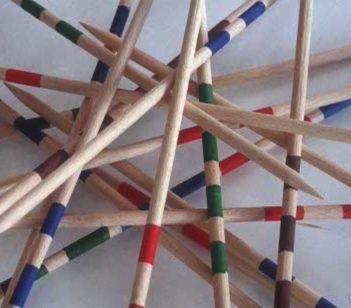
So clear is my memory of a screened-in porch on a modest Cape Cod style house where I lived as a child in West Hartford, Connecticut. It was a pleasant suburban neighborhood and our porch stood off to one side surrounded by leafy greenness. There in the shade of the porch we played board games upon a glasstop table, along with countless games of Pick Up Sticks. I considered myself steady of hand and quite skilled at it, but who knows; I was also the oldest of my siblings.
Decades later, I live on San Juan Island, a sea-swept island in the Salish Sea off B.C. Canada. Famous for windstorms in winter, the ground frequently becomes saturated, trees keel over, and power goes out. Ferry rides are then either rough—with vehicles shifting during transit–or canceled. Winds rise and the waves up rise in winter, while islanders dress down in wind breakers and boots and take weather alerts in stride.
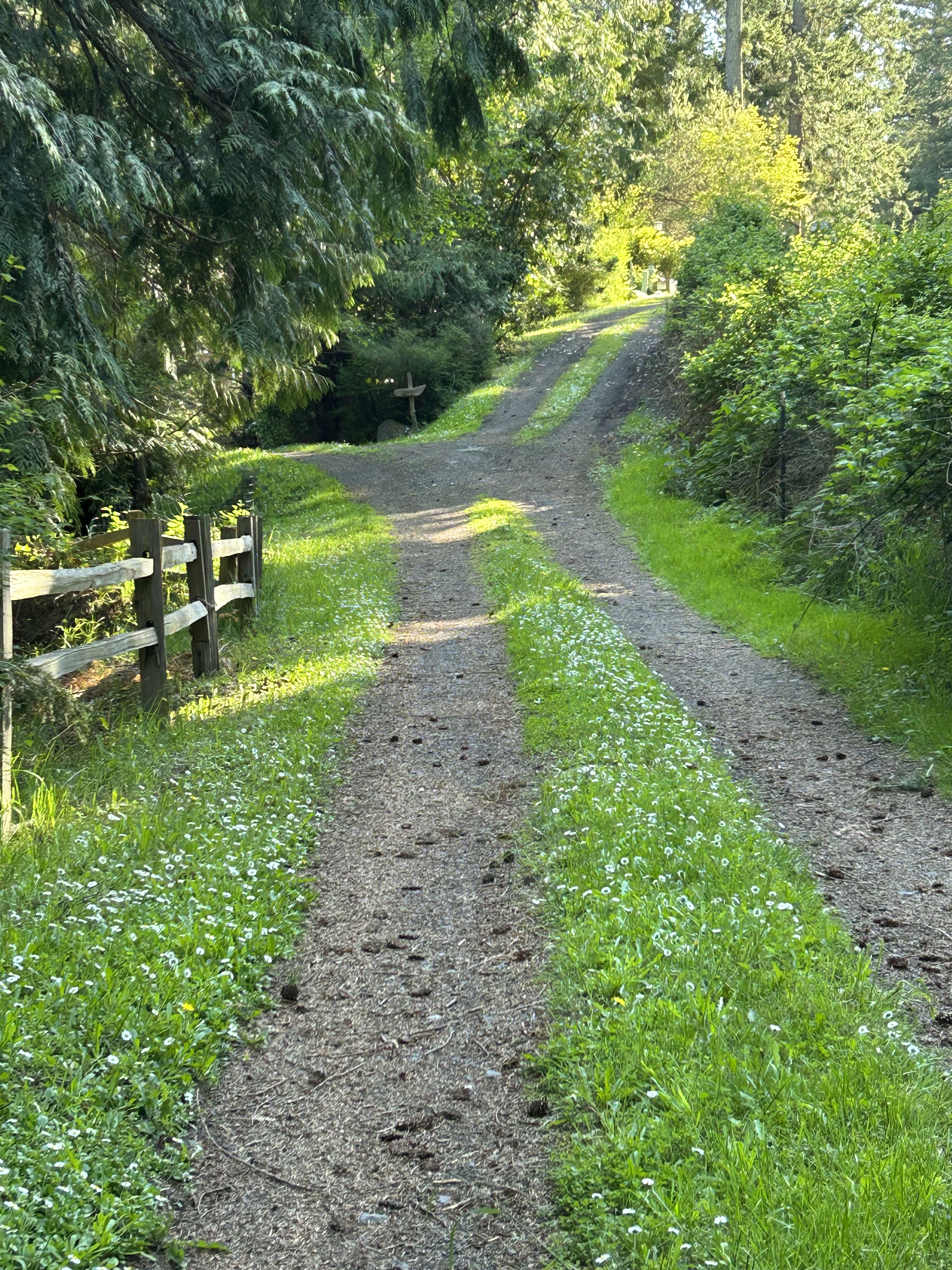
After each windstorm, I enjoy picking up sticks and fallen branches. Clearing the decks, the drive, and the grassy area. The gravel area with a picnic table and firepit. The drunken bocce court. The woodpile, stacked kayaks, and dormant gardens fenced for deer. One bank covered in salal and another bank in heather, as well as our wooded areas. Clearing the property clears my mind. It’s much like editing a long rambling verse.
Now meet my neighbor down the road who has kicked it up a notch. About three years ago, Dave began picking up fallen twigs and branches and piling them, intermittently, while walking trails through the woods. His habit soon expanded to his walks on rural roads, around the loop by Roche Harbor and out to Neil Bay. There are more walkers than cars where we live. I contribute to these piles, and I like to think everyone does.
Dave’s goal is simple: to reduce the fuel load in the forest. Raised in Orange County, Southern California, fire consciousness was built into his DNA. In the summer of 1967 he worked with a fire crew in the Deschutes National Forest, near Sisters, Oregon. “There were so many fires that summer,” Dave recalls, “I made enough money to pay for two years of college.”
Each spring Dave rents a chipper and tows it on his truck while picking up stacks by the side of the roads. The piles on trails are reached by a Kubota tractor. Firewise, a voluntary program to reduce wildfire risks at the local level—there are three Firewise groups in our area alone–and Roche Harbor Resort provide partial funding for this effort.
For my part I will always be picking up and piling sticks. As a writer I tie up a lot of loose ends in my head doing this, and I get to move my legs. I leave the truck, Kubota tractor, and chipper to my good neighbors.










 a little elbow room
 a little elbow room