And the Winner is…..

For years I didn’t really know who my parents were talking about when they mentioned Whitey Bulger in phone conversations between our respective coasts. I’m sure I feigned my understanding of this fugitive who had captured their imagination. And on the day when he was finally apprehended, I got an excited earful.

This man with Alcatraz in his past, comparable in our day to Dillinger and Al Capone, rose to #1 on the FBI’s Most Wanted List after the capture of bin Laden. Millions had been spent on the manhunt for Whitey, and I don’t know why I hadn’t known about him except that I never watch the program “America’s Most Wanted” and obviously don’t pay attention to the posters in post offices.

Whitey’s folklore out here in New England, however, was astounding. Even as his gang activity specialized in loan sharking, extortion and drugs, Whitey at one time conned the FBI into hiring him as an informant. And while on the run he hid in plain sight in Santa Monica, California, renting an apartment, assuming another name, and strolling the boulevards. A mere four miles from the Los Angeles FBI headquarters.

And on what was to be a pleasant little visit with my parents in New England, what I didn’t know was that a gangster would run through it. And here I sit today, researching the dude.

Boston’s Irish-American mob boss, Whitey Bulger, was sixteen years on the lam. My mother fell on the stairs our first night at her home. Whitey was incarcerated in The Plymouth County House of Correction, and mom spent the night in the ER and the next five days in Jordan Hospital, through the woods and across the street from said prison in Plymouth, Massachusetts. Canadian geese fly back and forth, grazing and pooping on the grounds of both.

I might have left Whitey to his prison, and mom to her hospital, and never the twain shall meet, but for the fact that Whitey kept complaining of chest pains or irregular heartbeat from his high-security cell. By the time we arrived with mom in an ambulance, Whitey had made at least three trips to Jordan Hospital. As concerned as I was about my mother, I kept looking over my shoulder at white haired men on stretchers and in wheel chairs, wondering is that him? 

“Don’t believe it!” I wanted to implore the hospital staff. Once a con, always a con. And a hospital, it seems to me, is full of uniforms to slip into, hiding places and escape hatches. My mind was racing.

Meanwhile, my mother was concerned with other matters. You need to know that this obsession was entirely new. I’d never seen it in her before, and she had been sucked in grandly. Mom had been playing, and was led to believe that she was a final contestant in the Publishers Clearing House Sweepstake.

“Why, even the florist in town has been alerted!” she cried from her stretcher in the ER.

So I took it as an incentive to get her home, to “spring her,” as they say.

We kept bringing in the mail over those days, all those Publishers Clearing House envelopes, all the forms-to-fill-out. And it cheered her up so. I noticed too how they keep postponing the announcement date, much like Whitey’s trial is continually postponed….

Whitey faces nineteen murder counts. My mother is hoping to win anything: five hundred dollars, or five-thousand-dollars-a-week-for-life. But the fact is she is home.

While Whitey sits there, in that horribly gray building, hoping for what? I think he already had it.

1 Comment

Filed under gangster

Benefits of Aging

Here’s how fast it goes: one moment you’re sliding down the banisters in life, and the next moment, it seems, holding onto the rail and being mindful not to wear socks on the stairs….

I think about aging a lot as I run a writing workshop every thursday with a dedicated group of writers at Queen Anne Manor, a retirement home in Seattle. And every week, I learn something about how best to age, and sometimes, why aging actually is best.

Not in every way, of course. No one wants to not remember names, or take half the day to walk to town. But what I have observed is that even as memory and speed decline, one’s life experience can make up for it.

“If what you are doing depends on knowledge, then you are going to do very well as you get older,” says psychology professor Neil Charness, PhD, of Florida State University. Consider the amygdala, the almond-sized and almond-shaped mass of gray matter deep in the temporal lobe of the brain, responsible for processing both memory and emotions. “Researchers have found that as we get older, our amygdala reacts less to negative things. It still responds when there’s a real threat but is less likely to get fired up every time a passerby frowns at you,” writes Barbara Strauch in The Secret Life of the Grown-Up Brain. “That seems to help us do a better job of maintaining emotional stability. And we all know that those who can calmly assess a situation generally have an advantage.”

As writers, accessing situations is what we do. Each week the participants in my workshop write their way through a specific incident in their lives with surgical precision, an uncanny objectivity, and perhaps more wisdom and understanding than they had ever known. “As we grow older,” finds American Aging Research, “we begin to look at things differently, in a better perspective…. A small bump on the road no longer seems like the end of the world.”

There’s a creative bonus in aging too. “The way our brains age may give us a broader perspective on the world, a capacity to see patterns, connect the dots, even be more creative,” cites Barbara Strauch. “And brain scanners show that the parts of the brain that specialize in daydreaming get more active as we age.”

I have the good fortune to work closely with my group and learn of their lives. And all the while, I am impressed with their calm, their stability and security, their positive outlook in life, open-mindedness and good spirits. Indeed, age seems to enhance the ability to laugh at one’s self, and to enjoy life as it is.

For what’s done is done, and for writers it’s all material.

1 Comment

Filed under amygdala

White Gloves

Following a visit to New England this winter, my daughter mentioned how dry her hands were there. How well I know, I thought. I remember living in a railroad flat apartment in NYC where the radiator heat dried my hands such that they would crack and bleed. I treated it by applying Vaseline to my hands at night and  wearing little white gloves to bed. The gloves must have been left over from the days of my dreaded ballroom dancing lessons in a large formal hall in Longmeadow, Massachusetts, where girls were made to dance with boys, and boys with girls–before we wanted to. Round and round the ballroom we’d go, and when one of the boys stepped all over a girl’s feet, the instructor, Mr. Ryder, would single him out to the center of the dance floor and make the boy dance with him. Oh, the look of devastation on the boy’s face–and the look of delight on Mr. Ryder’s.

The ballroom dancing lessons were scheduled on friday nights, the same time “The Twilight Zone” and “The Alfred Hitchcock Hour” aired on television. T.V.’s best night bar none, and there was no taping then. The only redeeming thing about the evening was the requisite stop at a Friendly’s Ice Cream shop following the lessons, which whatever mother was driving the carpool that week had to make. There, having missed our favorite television programs, we felt entitled to gorge on Friendly’s Big Beef hamburger and fries with a Friendly Cola, or their milkshake, the Fribble.

My bedroom at home was papered in a bright yellow with green leaves and stems and white flowers flying around on it, as if tossed into the air. It was always spring in that room. Not so in New England. Maybe I was meant for more temperate climates, as I insisted on open windows and fresh air no matter what time of year.

Our house was a big old colonial in which every room was heated by a radiator. An oil furnace the size of a Model T automobile churned away in the basement to keep it all going. I liked my corner bedroom for the cross currant of air I could create in it. At night I’d burrow under layers of blankets and read into early hours with a flashlight: Gone with the Wind, On the Beach, Bring Me a Unicorn, and all the journals of Anne Morrow Lindbergh, falling in love not so much with Charles Lindbergh, as with Anne. I loved the way she wrote.

One night–it must have been a Nor’easter outside–wind was whipping through my room so hard the radiator went into overdrive. Hissing its head off and spraying hot steaming water all around the room, I had more reason than ever to stay buried under blankets, head and all. What could I do but scream for help? It was my father that heard my cries and came in and shut it all off (how’d he do that without getting burned?), closing my windows too most likely. An old camper at heart, he understood my craving for fresh air and had no harsh words for me, not that I remember.

Years later, in that railroad flat apartment in NYC, the radiator heat was even worse. Well, everything was. I was trying to recover from a broken marriage and deal with a divorce at the time, and not doing particularly well with either. That might have had something to do with it. So I moved West, choosing California, to put my life into some sort of sunshine. And to get out of those damn white gloves.

2 Comments

Filed under ballroom dancing, dry hands, radiators, white gloves

Working with Friends

An article came across my screen which I printed, highlighted, dog-eared, pinned up, and have lived with these last few days. “Ten Things I Have Learned: Milton Glaser” was part of a talk he gave in London at AIGA, the professional association for design. I wish I could say I was there.

1. You Can Only Work For People You Like

This is a curious rule and it took me a long time to learn because at the beginning of my practice I felt the opposite. Professionalism required that you didn’t particularly like the people that you worked for or at least maintained an arms length relationship to them, which meant that I never had lunch with a client or saw them socially. Then some years ago I realized that the opposite was true. I discovered that all the work I had done that was meaningful and significant came out of an affectionate relationship with a client. And I am not talking about professionalism; I am talking about affection. I am talking about a client and you sharing some common ground. That in fact your view of life is in someway congruent with the client, otherwise it is a bitter and hopeless struggle. 

We’re not all name architects like Milton Glaser, or name anything, but this gave me pause and made me want to throw out everything I had ever heard about working with friends, namely that it would hurt the friendship. With that in mind, I asked around, “What experiences have you had working with friends?” And the response was nothing but positive.

One of my sisters in Boston has hired friends on a number of occasions for assistance in organization, interior design, and dance, as well as piano instruction. “It’s a chance to further develop our relationship, appreciate their work self, and I don’t feel taken advantage of financially. Overall I love and respect their work and it’s much more fun,” she notes.

A friend in Laguna Beach called on a close friend, a landscape architect, to redesign her grounds, and “the contractor we hired to remodel our house was a friend, as was one of the other contractors we asked to bid. I was pretty nervous about asking someone we knew socially to bid, but both of them were so highly recommended by so many people, we had to…. One of the hardest  parts was telling the contractor we didn’t hire that we chose a different contractor. Harder because he was a friend. I got him a gift certificate, apologized, etc. But also ended up recommending them both for a huge job which he ended up getting.” So it all worked.

My sister-in-law in The Bay Area sees her friendships and working relations as one giant crossword puzzle. Former employees have become close friends. At one time she worked for her closest friend for several years, as did other friends. “I would hire and work with them again,” she says. “I think they would agree to work with me,” or in one case, “I would work for her.”

Back in Boston, my sister adds that she “loves supporting (in all ways) and learning about my friends at work.” If anything, “there have certainly been times I’ve had to remind myself not to discuss other things. I deal with my urges by asking if they have time when we’re done or if they’re free to get together later.” Her advice: be selective and look for the most “competent, focused and professional so it’s easy.”

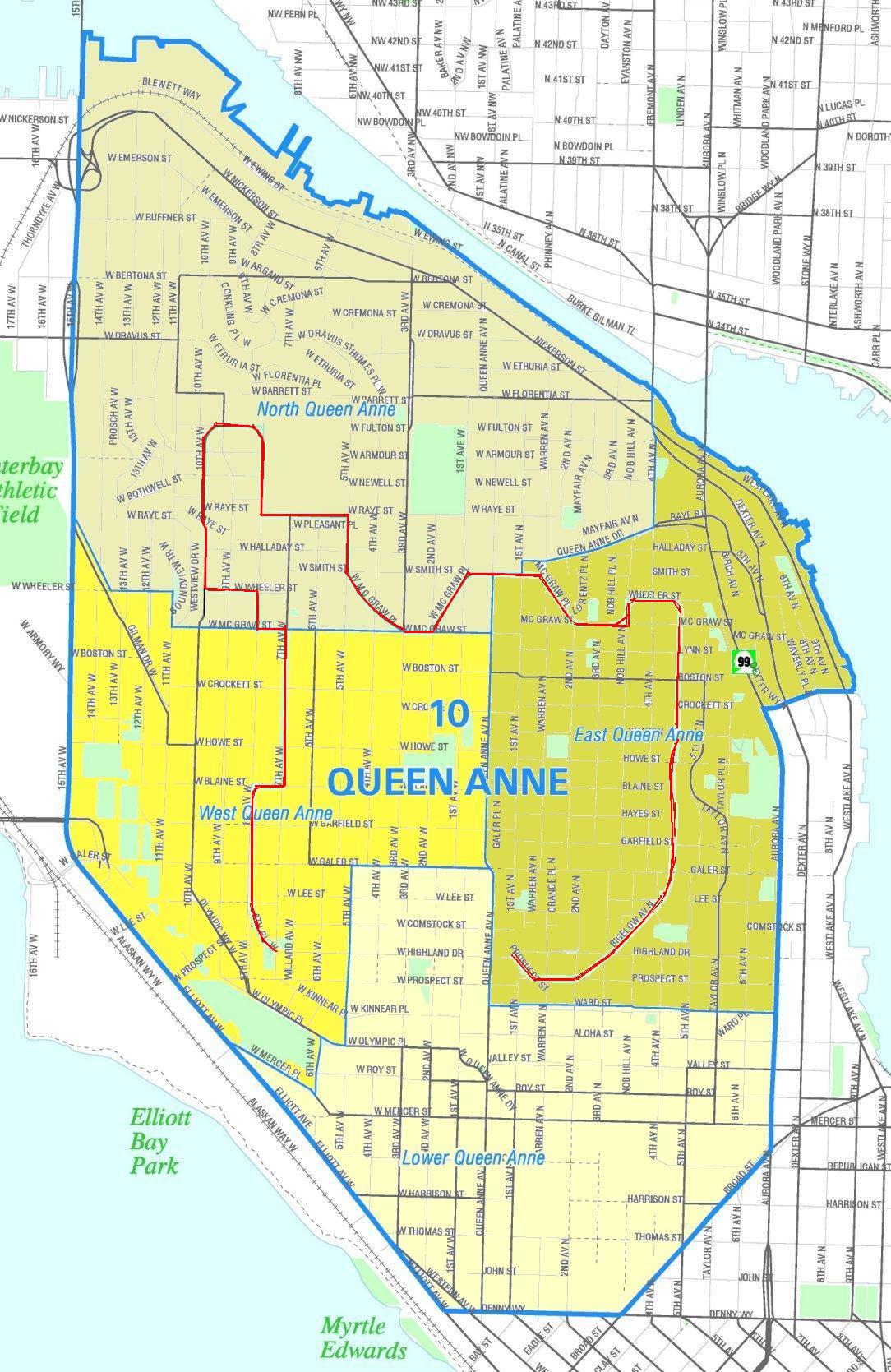
Where I live on Queen Anne in Seattle there exists a culture of “walking the loop,” a four mile route around the top of the hill. Passing under canopies of majestic oaks, walnut, and chestnut trees, overlooking Lake Union and Cascade Mountain Range to the east, Puget Sound and the Olympic Mountains on the west side of the hill, many of us aim to do it every day for our souls as well as our bodies. But there’s walking and there’s strolling, so one of our oh-so-fit friends works as a personal trainer for a couple of her friends. She knows to leave her little dog at home, look fabulous in workout clothes, get all wired up with ear buds and music, turn her cap backward and go like a train. Anyone who sees her out walking knows better than to stop and talk; a quick wave will have to do. And now some of us are going with her, including me.

Among those asked, the experiences shared of working with friends were both relationship building and community building. In fact, that was all I heard. To Milton Glaser’s suggestion that you only work for people you like, I would add: and only hire those you like.

And imagine what a different world it would be.

3 Comments

Filed under working with friends

Altered Books

I am coming off an Inaugural high this week, hoping our country will behave better, the world might find some peace, and that I pay more attention to my writing craft. “Tend to my elephants,” as my friend Teri would say.

Sometimes creativity knows no bounds, and one of the leading literary figures here in the Pacific Northwest, Rebecca Brown, illustrates just that with her “altered books.” Pieces from the series “God, Mother, Country and Rock + Roll” 2012 were recently on exhibit at the Frye Art Museum in Seattle, accompanied by some of the “curiosity cabinets” from her nearby writing studio.

“What do I have to work with but words, and words are abstract, they’re not things,” notes Brown. “As a writer I am envious of the physicality of visual art.” And so when she is not writing, “…when I’m flustered, when I can’t get through, when I need to get out of the mode of verbal abstraction,” she has taken to marking up, drawing on, painting, crossing out, cutting, pasting and deconstructing other people’s books.

“I never thought of this stuff as art,” states Brown, “and I still don’t, but now that it’s in a museum, I’m nervous about it and I wonder, ‘is it art?’”

I think it is something like Robert Rauschenberg’s iconic “Erased de Kooning Drawing” 1953, in exploring the very definition of art. Using words as her material, changing their meaning, and transforming the medium, Rebecca Brown’s literary imagination becomes her artistic genius.

And I, for one, am wordless.

1 Comment

Filed under art

The Long March

“First they ignore you, then they laugh at you, then they fight you, then you win.”  Mahatma Ghandi

I can’t believe that we are here. That it has come to this. My head still pounds from the chanting: “Olympia, hear our cry, no more children need to die! Olympia, hear our cry, no more children need to die!….” 

We were 1,500 protestors strong, standing on the grassy Seattle Center Mural Amphitheatre at the base of The Space Needle. We had walked up 4th Avenue from downtown escorted by a police motorcade. A cold snap gripped the region, but for once it wasn’t raining. Gloved hands held signs, gripped coffee cups, and some held the hand of a child along for the march.

A small boy’s handmade sign in the crowd read, “Don’t Sell Guns to Bad Guys.”

The Stand Up Washington March and Rally for Gun Control on January 13th was an event for recognizing that we had reached a tipping point. For turning grief and anger into action.

It was the day before the opening of the 2013 Legislative session, and civic, religious and education leaders assembled to show support for sensible gun legislation. Having drafted the bill to ban assault weapons, State Sen. Ed Murray assured us, “We are going to see movement in Olympia.”

Music threaded throughout the rally, all the old familiar songs: “We Shall Overcome” and “Down By the Riverside” sung by the Seattle Peace Chorus. How many times? I thought. How many times?

Mayor Mike McGinn took the podium. The Space Needle loomed large behind him and a trace of blue in the marbled sky.

“This is the spot of The World’s Fair fifty years ago, where we dreamed of the place where we would want to be one day,” he said. “And once again, today, we are dreaming of the place where we want us to be fifty years from now.”

That’s how it goes, I thought. Inching on, inching on….

How did we get here?

I feel I’ve been here before. Our system is broken and we are shattered.

Longtime gun control advocate Ralph Fascitelli of Washington Cease Fire reminded us that NRA members comprise only 1% of the population in the U.S. Similarly, NYC Mayor Bloomberg insists that “The NRA’s power is more myth than reality.”

Many of us didn’t see this one coming, this war with ourselves.

And yet, we did it before and we will do it again. Didn’t we break the back of segregation, end the war in Vietnam, obtain women’s rights, and most recently, marriage equality in our state?

Easy to feel fellowship at a rally. It really wasn’t until the event was over and we all fanned out in various directions throughout the city, that I fully appreciated our shared community, our humanity. Could it be that we, primarily, are it?

While walking away with volunteers in white Cease Fire shirts, Grandmothers Against Gun Violence, the handsome man in the royal blue turban from SIKHS United Against Gun Violence, various Veterans for Peace, and the Buddhist Peace Fellowship members who squeezed into a small blue sedan, I thought, this is my city, this is my country.

11 Comments

Filed under gun control

The New Year’s Resolution that Silenced the Room

It was a small and informal gathering on New Years Eve at the home of a friend we’ll call Teri as that’s her name. Teri is an uncommon person, filled to the brim with inner peace. In the hope that some of it might spill over, I always try to sit next to her.

We dined on roasted turkey and grilled salmon with a blackberry and ginger sauce. We wined and clicked champagne glasses a few times. Three dogs played around the room. Most of us were all of an age where our children have grown and gone. Dogs stick around.

Teri looked stunning. One guest presented her with a scarf which she tied on and wore with aplomb. Next she came out with a beautifully proportioned chocolate hazelnut torte atop a vintage glass cake stand. I noted how much more exquisite baked goods look with a little elevation. Something that bakeries have known for ages, and we have only just now adopted.

With a couple hours still to go to midnight, our hostess was trying to keep the party going. She suggested we share our resolutions for the new year, and since no one spoke up, Teri began. Glasses were filled once again, and we were all seated around the living room and around the storyteller.

She began. Her story climbed like a trek with windings, switches, and sidetracks, and then unfolded, articulating a new years resolution that brought silence to the room. Her story was of elephants and I will do my best to retell.

Many years ago Teri felt the urge to go to Nepal, alone, and signed up for an eco tour. The group would study the Gangetic river dolphin in the remote western region of Nepal. Requiring deep pools of water, the dolphin were endangered by plans to build a dam. But before departing on the expedition, Teri discovered a lump in her breast.

“Medical professionals kept assuring me that in 90% of the cases, the lump meant nothing,” she recalls. “But in test after test, I kept falling into that 10%.”

Suddenly it was time to operate.

The Nepal trip was only two weeks out, and Teri held onto it. In the process, “I became known as the woman going to Nepal, rather than a woman with breast cancer.” She readied herself with packing, got all the required immunizations, and put everything in order in hope that she could go. Most remarkably, she determined that anyone signed up for an eco tour such as this would be either a naturalist or a biologist, and in all likelihood she would find someone to help administer her follow up care. Indeed, her tent mate in Nepal turned out to be an oncology nurse.

From camp, they rode elephants into the jungle. Passengers sat facing out, two riders per elephant, with one driver behind the elephant’s head directing him with a stick. There was no road, no path, just into the jungle they stepped.

“And every time he hit the giant beast,” Teri recalled, “the elephant would reach up with his trunk and pull down massive branches, demonstrating incredible power and strength. It was terrifying.”

But then one of the passengers dropped a lens cover, and by giving a different type of poke the guide  somehow communicated the problem to the elephant. As gentle as can be, the elephant fished around the ground with his trunk, found the lens cap, picked it up and handed it the guide. From that moment on, Teri had a new respect for the massive beast.

photo-145

Out of the jungle and down by the river, the elephants demonstrated a playful, gentle, side. The trek continued peacefully following a path alongside the river. At night in the camp while sleeping in her hut, Teri drew comfort from the sound of elephants trumpeting in the distance.

Such was her elephant experience, then came her recent dream.

“In my dream, my husband and I had moved from our house into a smaller apartment. It wasn’t adequate,” she noted, “but I kept insisting everything was alright, it would only be for one year. That’s what I kept saying.”

However everything was not alright.

“I went back to our house to check on my elephants, and they were gone. ‘Where are they?’ I cried.”

“I had to send them off to the butcher,” was the reply.” The butcher!

Teri shuddered and explained her dream as if just awakening, right there on her living room sofa on New Years Eve.

“I believe that the dream was telling me we cannot justify wasting our time, in this case a year. And that I need to think big. I had made my world too small, and elephants don’t breed in captivity.”

“Elephants are all about fragility and gentleness, as well as strength and power. I know what I have to do,” our hostess smiled, “I have to tend to my elephants.”

Then she asked if anyone else would care to share their resolution, and the room was silent. We all knew what we had to do: tend to our elephants too.

Teri Clifford has a Masters Degree in Developmental Psychology. She holds principal’s, administrator’s and special education certificates. Teri is a Reiki Master, a hypnotist, as well as a minister in the Universal Life Church. She advocates for children and their families towards success in life as well as educational settings. Teri also has a healing practice. She lives in Seattle, Washington and can be reached at tericlifford@comcast.net

5 Comments

Filed under breast cancer, elephant, new year's resolution

My Early Retirement Plan

San Francisco has long felt like a missed chapter in my life. In an effort to make it up, we have celebrated Christmas there the past couple of years. And now, all I want for Christmas is San Francisco.

Where else in your own country do you land and find that the billboards speak a language of their own, intelligible only to natives? And where else do cabs come and pick you up without any apparent call, and deliver you without any sign of payment? I know my daughters have something to do with this. They know the workings of this city. They are enmeshed in it, while it baffles me. But then, I am easily baffled by technology and enchanted by magic, so San Francisco is for me too. I don’t know how it works but it does, remarkably so.

Where else would you dine on sushi at a restaurant named Tsunami? And find stocking stuffers in a toy store named Tantrum?

With two daughters living there we have a place to stay. Their flat is in Buena Vista alongside the park. It’s the best of both worlds: a rather posh area on the edge of Haight Ashbury.

In The Haight I meet many Tibetans minding their stores. I delight in their colorful goods, listen to their stories, and purchase a strand of prayer beads to drape around a Santo in my writing room in Seattle. The beads are in honor of a friend I grew up with in Connecticut, only to learn decades later that she has become a Buddhist. Janie, if you are reading this, it is one more example of you “walking the walk” in life, while all I do is write about it. How I love and admire you, Jane.

Contradictions co-exist in all cities, but seem more extreme in San Francisco. The Wall Street of the West, the birthplace of so many start-ups, and surely one of the “establishments” of bohemian lifestyle. Oh, the splendor and the squalor of it all!

And just when you thought that everyone in this fair city is young, up on the 19th floor of The Mark Hopkins Hotel at 1 Nob Hill, an older generation is enjoying cocktails and dancing after dark at The Top of the Mark. Men in jackets and ties, women dressed to the nines. A Tony Bennett kind of place where the male vocalists sound like him, and all the women, like Etta James or Nina Simone.

Honey, if we live in San Francisco oneday, that is where we will go if we grow old and can afford it. They’ll be playing The Beatles songs by then, and our appetite will have finally shrunk, and we could make a dinner of appetizers and just keep dancing….

But how in the world will we ever get up that hill?

6 Comments

Filed under Christmas, San Francisco

Days That Never Go Away

For days now I have had an unshakeable identity I hadn’t felt for a long time, and that is that I am a Connecticut girl born and bred. However much I ventured off and adopted other regions, it all came back to Connecticut for me this week with the shootings at Sandy Hook Elementary School. I think everyone felt this way. We all became Connecticut citizens at that moment.

I thought I could see my old neighborhood in the images. It looked familiar enough, all the parents and children, houses and trees. I saw my bucolic childhood. A time when no one locked doors. When no one other than hunters owned guns, and they took them away to wherever it was they went to hunt. While we were growing up the only guns we saw were in television shows, cop dramas and westerns, Dragnet and 77 Sunset Strip, Rawhide and Bonanza. In other words, when you saw a gun, you knew it was a toy.

And that is where I reached the end of the road in resemblance. No home then would have possessed assault weapons as this one did in Newtown, Connecticut. The Right to Bear Arms has become unbearable. Our children deserve the right to be safe. The British aren’t coming, and hunters can hunt in designated reserves where their arms are checked in, just as we leave our boats in marinas.

Gun control has long been an issue in my house. Twenty years ago when I was despairing over all the guns that were already out there, even if we could stop the sales tomorrow, my seven year old at the time said, “That’s easy, mom. They just have to stop making bullets.”

I knew she was right; if we wrap our heads around it, we can do anything. Now a woman of twenty-seven, nothing has happened in our nation in this regard. Nothing with the exception of more casualties. But just this week in the intro to her blog she wrote, “It seems like there is enough momentum to create some real change in the coming years.”(http://amadcity.com/2012/12/14/hope-take-two/).

Let’s topple the gun lobbyists who have held this country hostage for far too long. Let’s put our technology to the task. And let’s see that our country runs more like a National Park, realizing that we are at once both the caretakers and the precious wildlife.

4 Comments

Filed under assault weapons, childhood, gun control, gun lobbyists

Post Office Bay

Every year at this time I throw myself into doing Christmas cards with a devotion that astounds even me. The reason why, of course, is that some of us have moved more than we ever would have imagined, or have seen so many others off, that Christmas cards, when it comes down to it, are often the last link. So I hold onto the tradition in an effort not to let people slip through the crack.

A few weeks ago I wrote about the birdhouse-like constructions of Little Free Libraries. (https://alittleelbowroom.com/2012/11/14/shrines-in-the-hood/). Then, in the midst of the Pacific Ocean on Floreana Island in the archipelago of Galapagos, I encountered an old wooden barrel with a door carved into its side and a belly full of mail, serving as a post office. Easily the earliest mailing system in the East Tropical Pacific and possibly the only free one in the world, the post office barrel is remarkably similar to Little Free Libraries in its simplicity, intent, and reliance on the kindness of strangers.

IMG_1766-4

In the late 1700’s the Galapagos was a frequent stop for whalers. On an island with a landing beach of volcanic origin and sea lions lying in the sun, a British naval captain by the name of James Colvett placed the barrel and declared, “Everyone can drop off his letters, but he must also take the mail having his same destination and deliver it to its addressee.” Thus outbound ships rounding the cape dropped mail off, and returning ships delivered it.

Post Office Bay works much the same way today. As visitors we are encouraged to leave postcards and take home any that we could deliver. I sat down and read through them all except those in other languages. Over and over, people expressed their astonishment with a place nearly perfect ecologically. Yellow Warblers, Lava Herons, Great Blue Herons, Marine Iguanas, Lava Lizards ran around us while we wrote, and we were as comfortable with them as they were with us. Such was the joy people tried in every way to express in their postcards: “nothing runs away from us here!”

Galapagos illustrates an important lesson, and that is that fear can be unlearned. It was not until 1959 that Ecuador designated 97% of the Galapagos Islands’ land area a National Park. Up until then, in the days of buccaneers, pirates, convicts and colonists, there was all manner of pillage and plunder of wildlife. Now no one treads but eco-touring visitors, walking around the nests and not disturbing anything. I want to read all kinds of hopefulness in this, for wildlife, for humans, for earth.

Something tells me I will never forget, but if the postcard I addressed to myself on Post Office Bay ever shows up, I asked the carrier to “remind me how happy I am here.”

2 Comments

Filed under christmas cards, eco-touring, Galapagos Sea Lion, Great Blue Heron, Lava Heron, Lava Lizard, Marine Iguana, postal system, Yellow Warbler