
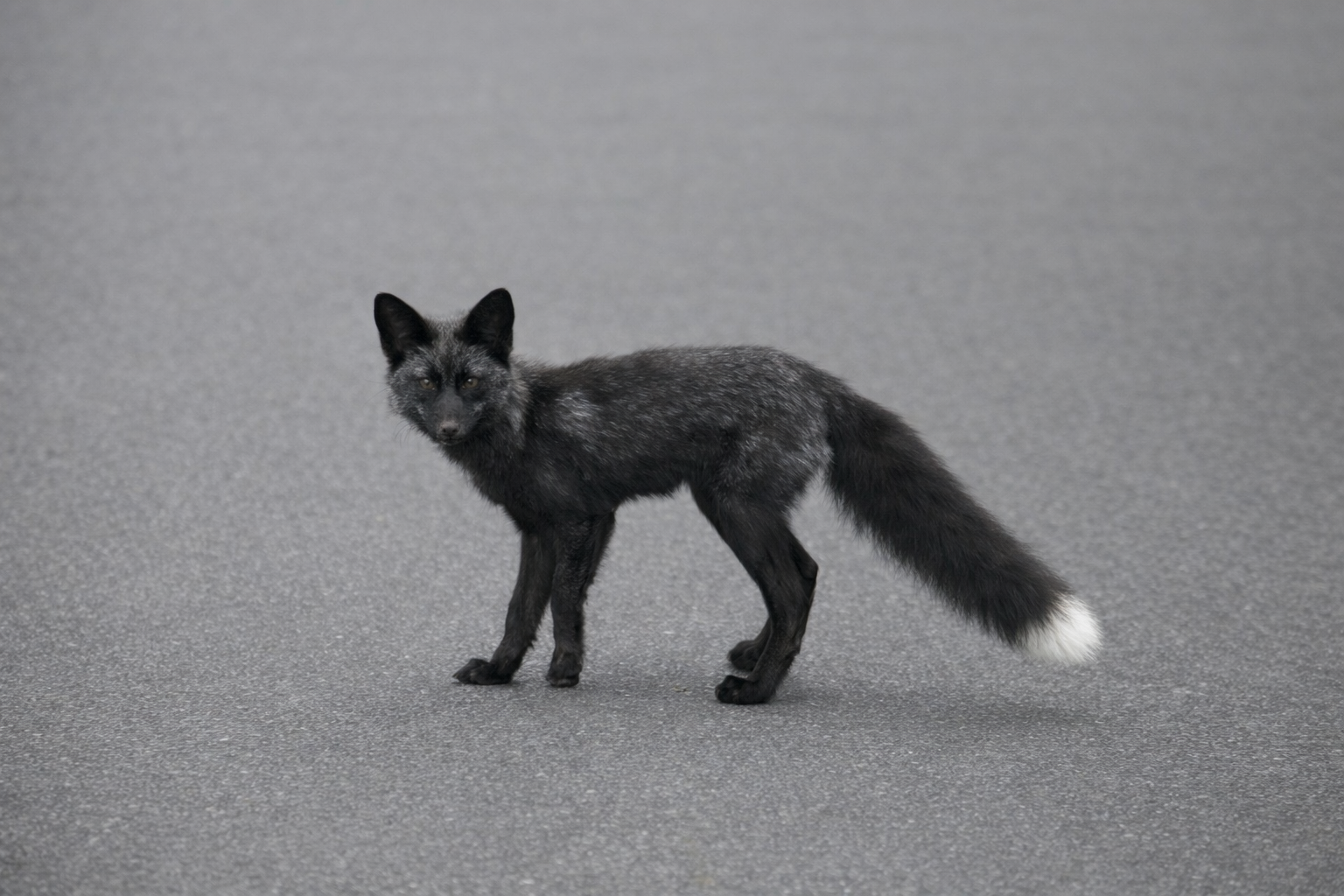
Photo credit: Paul Mayer
BY KIMBERLY MAYER
Having been at this column for a while, I am sometimes asked where I find my topics. That, of course, is the fun part: going out in the world to pay attention, to see what’s up and write about it. But sometimes it’s what one doesn’t see. And I haven’t been seeing any foxes on island lately.
Practically a figurehead on San Juan Island, the red fox (Vulpes vulpes) species refers to black, silver, and brown, as well as a tawny color—all with a white tip on the tail. First introduced by settlers in the early-to-mid 1900’s to reduce a European rabbit population, which in turn had been introduced by settlers in the 1880’s, the red fox has become a part of our ecosystem. But why I haven’t seen them lately, I don’t know.
Anywhere I ever lived, foxes were elusive. Like everyone I became endeared to them in childhood storybooks, but the first fox I saw were dead. During mass in winter, full fox pelts often wrapped around women’s wool coats as collars. Seated behind and beside them in the pews, I found it painful to deal with their sweet little frozen faces, tiny paws, and bushy tails. A more sable and pearls crowd congregated at my father’s protestant church, where sometimes the dramatic sweep of a full-length red fox coat came down the center aisle of the sanctuary. The storybook fox. The Catholic fox. The Protestant fox.
But on our island the fox thrives. The National Park Services asks visitors to keep a distance of at least 75 ft, though fox in our neighborhood don’t keep 75’ from us. They come out of the forest or emerge from culverts along the side of the road and walk the road and trails we do. One black fox in particular crossed our deck at the same time every evening for months, pausing close to the house to give eye contact to our dog in the window who was waiting for her. Dogs and wolves may be most closely related animals to the fox, though I see an almost feline face in the fox. But where are they?
Here’s the thing: I thought Avian influenza might be the reason I was not seeing fox now. An outbreak had occurred this winter, and another outbreak is imminent this spring. Carried on high by contaminated migratory birds, it can affect scavengers such as raccoons and fox. But Kassie Quackenbush, Wildlife Rehabilitation Manager at Wolf Hollow Wildlife, informs me there had been but two positive cases of Avian influenza among fox this year. “It lives in the environment already,” she says. And if ever there had been a worse time, it was a few years back when Avian influenza first came across the Atlantic and worked its way west. So it is not as I feared.
As soon as this is published, fox will emerge, I’m sure.
Originally published Wednesday April 15, 2026 in The Journal of the San Juan Islands

 a little elbow room

Kim, I love this piece about Fox. I am a big fan of Fox, and we miss them here in the PNW. Had so many in Colorado and a den right out behind our little run-in shed. I wonder if they are just denning right now? But, wouldn’t they be out hunting to feed their kits? Hmmm, I’m glad you asked about them and please let us know when they emerge…
Love, Katie
I forgot to tell you the fox did emerge at last, and as you suggested they were denning.
Now we all drive 15 mph to watch out for kits playing on the side of the road!
I grew up with Protestant foxes in my Presbyterian Church. One stared at me from the pew in front of me. The other was encircled around my mother‘s elegant neck. She also wore a beaver coat. I loved to dress up in it. It smelled just like her, and Chanel No 5.
Do you know how much fun I have because of you? Now on walks, I look at every fox in terms of, was your lineage in the Protestant church or the Catholic? Generally they haven’t a clue in our woods.
You have added much fun in my life! Now when I walk in the woods and come upon a fox I wonder with each one, was your lineage Protestant or Catholic? Mostly they haven’t a clue out here, bless their hearts.