Tag Archives: Pacific Northwest coastal region

Ode to the Dinosaur-like Bird

BY KIMBERLY MAYER

My book group on island takes a hiatus of a couple months in winter with a great classic as our read. This year it’s Tolstoy’s Anna Karenina. At an age where we all have more time than ever, we’ll whistle through it much like we devoured Dicken’s David Copperfield last winter. New literature will simply have to wait; it’s become a tradition to start each new year with a thick classic. This may or may not be as bizarre as other New Year traditions, my favorite of which is Las doce uvas de la suerte, the Spanish custom of eating twelve grapes under the table on New Years Eve.

In birding circles, the first bird one spots on January 1 is considered a sign for the rest of the year. A sparrow promises better days ahead, a goldfinch brings happiness and prosperity, a grosbeak heals old wounds, etc. Did I even remember to look for birds on Jan 1? I think not. I am spending the holidays in San Diego, and unless I’m in a park or the beach, I’m not sure to even see a bird here. Shocking to say when birds are overhead and all around us on island. There, time stands still when I notice the heron, and I always do. 

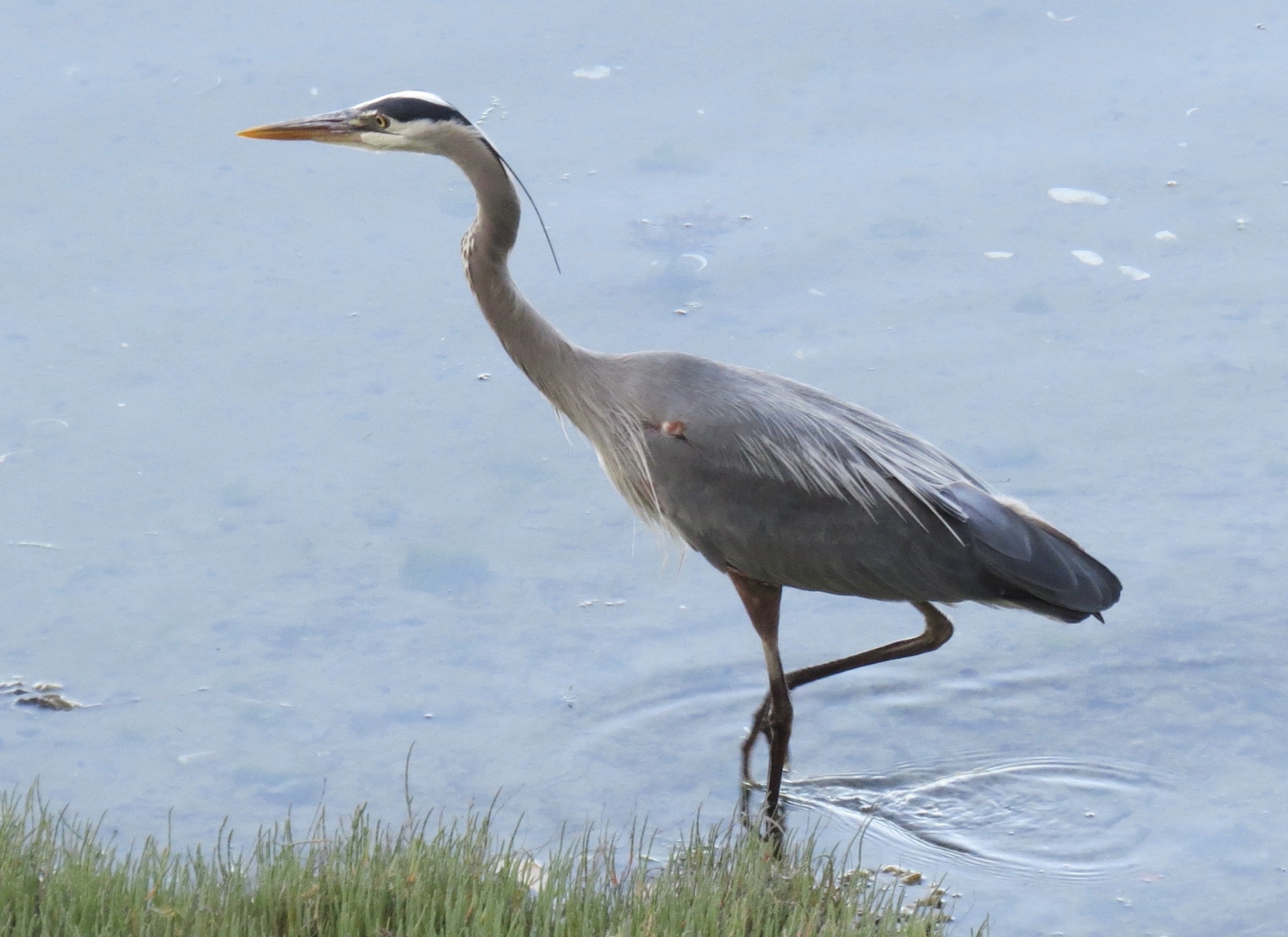
The heron surely represents patience. Poised like sculpture, wading in water–both freshwater and coastal–scanning for small fish, the great blue heron stands four foot tall on long skinny legs which possibly look like reeds in the water. Extending exceptionally long necks they strike their prey with lightning speed, spearing with razor-sharp bills.

Nesting high in trees and with outstretched wings of 6 feet, the great blue heron is a common sight in Western Washington where we are fortunate to have them as year-round residents. Consider the Pacific Northwest a sanctuary for the great blue heron. A refuge for all of us who, like birds, want to be left alone. 

Originally published January 15, 2025 in The Journal of the San Juan Islands

5 Comments

Filed under Birds

A Fern Named Fair Maiden

BY KIMBERLY MAYER

My daughter in San Diego has a 5 foot cactus in her home she calls Ole’. The air is dry, the light is bright, and the walls are white. Ole’ grows as proudly indoors as he would outdoors. It was on a visit to San Diego that I became enticed with miniature succulents. Growing in gardens, in mini-pots, on wall gardens or living walls, it was all the rage. Back home I got myself hooked, then I gave some away and got others hooked. That is how it happens. But here in the Northwest, succulents have to come indoors for the winter. My arrangements took over the dining table last year. It was cute for a while, but it wasn’t us. In anticipation of another long winter, I am regaining my senses.

In outdoor gardening we are mindful to go with natives, but what about our indoor plants? Travel through any nursery’s indoor selection anywhere and you’ll find predominantly tropicals: palms, dracaenas, rubber tree, snake plant, philodendron. We’ve all done it, we all do it, yet few of us live in the tropics either.

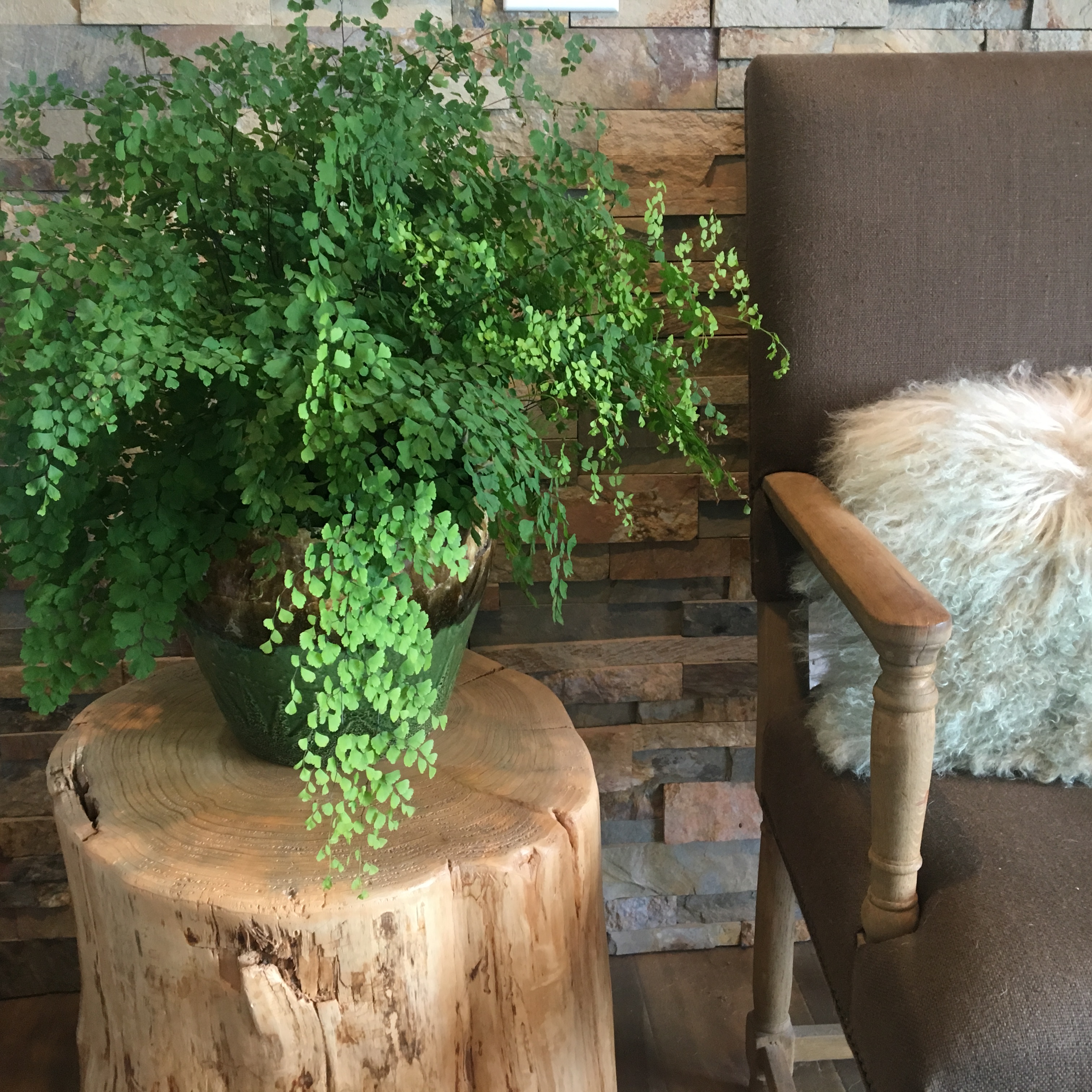
It started with the idea of a centerpiece. Did I really want to look at succulent creatures from outer space crawling all about my dining table again, or would I like something soft and calming, something greener, something that moves? Something indigenous like fern? They’re all over my house now, one type or another of fern.

I feel like my house has come home.

The Pacific Northwest coastal region is home to approximately 40 species of fern. They blanket the floor beneath the tree canopy in forests, or in my case, beneath a wooden ceiling. With fern for indoor plants my home is as at one with the woods as the day we cedar-shingled the exterior. I seem to be onto something.

It asks more of me to be the mother of fern, but as an empty nester, I rather like that. Thirsty creatures with a penchant for daily mistings, I’m not quite sure how I will ever travel again. But for now I’m not going anywhere. I have an impending deadline with my agent on my book, and in the meantime have rattled off another blog post on the natural world.

Because what other world is there really?

2 Comments

Filed under indoor plants