At the Intersection of Art & Sports

1725085_10202043735472354_543291836_n

Painting by Nikhil Misra

 I am not a football fan. When a game is on in my house, I look at it as reading time and disappear into a quiet quarter with a good book. Or go for a nice long walk. If any spectator sport calls my name, that would have to be baseball. But this week I feel surprisingly inspired to write about football.

It isn’t everyday you win a Super Bowl. On Sunday, February 2nd Seattle did just that with the Seahawks, a first in the franchise history. This was new ground.

Even I was feeling it. Waking that morning before the game with a sudden desire for a flag in my window box or a banner hanging on my house, I went into town for some Seahawk memorabilia. But everything was sold out, all the scarves, the beads, the shirts…. everyone way ahead of me, by weeks. Then I remembered my stationery store where they inflated a bunch of bright blue and green balloons, making my day. Like a turned-around parade, I marched home on the sidewalk carrying the balloon bouquet as drivers honked and waved.

Now I could get down to the game, and you know how well that went.

Later that evening we found ourselves at the Hilltop Ale House in Queen Anne. Warmer than ever with a packed crowd, joyous cheers and hearty applause broke out for every “12th man” who walked through the door. Every one of us.

All the problems in the world, all the sadness. But for one glorious moment, we forgot. Together we forgot it all.

And to think I might have missed this.

note: As I write, the Seahawks are preparing to parade through downtown and “hundreds of thousands” are expected to attend. I can believe it, as my neighborhood is pouring out, every man, woman and child dressed in the colors. I wasn’t going to go that far. I’m just trying to attend the Northwest Flower & Garden Show at the Convention Center, and wondering how to get around the mob.

4 Comments

Filed under reading

Between Acts

Everest Range

So I was reading from Thomas Merton’s journals this week and came upon this: “It is really illogical that I should get temptations to run off to another monastery and to another Order of monks.” Oh my God, was he this way too? Restless and wondering whether life would be better in that monastery over there instead? I nearly fell out of my chair. For here I go again, looking to reinvent my life.

For years, change was almost scripted for us. Due to job transfers and job changes our family hopped around, West Coast, East Coast, Southwest, and Pacific Northwest. That which moved us also settled us in some pretty spectacular places. And I indulged in a nearly promiscuous love affair with houses and starting over.

Today we are more settled having been in this home, and in this city, longer than any other. But all our cards are in the air as my husband has left his position of fifteen years. And where did he go, the hardest working man I had ever known? He went trekking in the Himalayas….

Always believe it when you hear that climbing the Himalayas is life-changing.

Whatever Paul does next has to be entirely new and challenging. He needs mountains. So we’re giving our imaginations free reign and looking at everything, from other offers, to consulting, to living abroad—it’s now or never, he says—to living in a high-rise downtown, to moving to the San Juan Islands and living near the boat. In Panama this might be called “living off the grid.” I’m not suggesting anything like that, but definitely taking stress down a few notches. I hate to say it, but we could grow old there.

I am learning to shop in my own closet. Whatever path we chose, we have too much stuff. How simple it would have been for Thomas Merton!

I’m happy for Paul to have this time off, and treasure the time together. Long walks pondering what to do with the rest of our lives…. Don’t know what we’ll do, but change is in the wind. My folks are alive and well and would like us to come east. Our daughters live in San Francisco.

We are betwixt and between and maybe, just maybe, entirely free.

5 Comments

Filed under reinvent

The Book Drunk

EmergingAmaryllisSmallI came home this winter with handfuls of hyacinth bulbs and rooted them in jars of water, all lined up on a windowsill. For awhile it gave me great pleasure. When my husband could see nothing happening whatsoever, I was admiring the silky long white roots swimming like seaworms. Suddenly the flower spikes shot up, far too fast. For hyacinths seem spent as soon as they bloom.

Much like coming headlong to the end of a good book.

It is the anticipation of all the unread books by your chair, by your bed, and piled on the dining table that really get to you. To say nothing of miles and miles of books on shelves. Lost and absorbed in a good book, this is bliss. When it’s over, you’ve been transplanted alright, but where are you? Cold and alone, on an island at sea. Floundering. Between worlds. It can take a little while to find one’s footing again.

Oh magnificent reading, why must it ever end?

The only thing to do, of course, is pick up another book. Fortunately you have them stacked away and at the ready. While everyone appears to be unloading their home libraries, you’ve become a bibliophile (something that was in you all along). The child who lined up all the Nancy Drew books in the series. Later, the journals of Anne Morrow Lindbergh. Still later, the works of Joan Dideon, and on and on….

The more you read, the further behind you get. Books seem to beget books. Friends lend them and give them, and you can buy books faster than you can read them, Evelyn Wood or no Evelyn Wood Speed Reading Program. Who even wants to skim? Not you. You love every word too much.

Give me the long slow amaryllis bulb. The steady, slow progress of inching along every day. Poised for greatness like a good read. The gradual unfurling, in no hurry to flower. This is the moment I most enjoy.

6 Comments

Filed under bulbs

Semantics

Snow PicSometimes it is necessary to borrow a phrase from another country to enrich one’s life in this one. Nothing illustrates this point more than the English expression, “the pleasure ground,” as a substitute for yard or lawn.

I did a little research on this subject and discovered that the idea of uniformly kept lawns in suburbia is unique to the U.S.A. It seems that in our enthusiasm for democracy we thought neighborhoods should share the same look, from one lot to the next, like one long continuous park. Equality, in other words. But sometimes equality is boring.

Yard + lawn = yawn.

Across the pond they see things differently. The English take more ownership of their lot, front and back, referring to it as “the pleasure ground.” And as lots become smaller in the cities, each square foot is considered all the more precious.

Growing a hedge or erecting a wall around one’s lot helps realize one’s dream, whether it be a kitchen or cutting garden, raising hens, or creating a green oasis of privacy and quiet. In other words it’s your land to do what you want, and the English have always embraced that concept.

The second phrase may be more about semantics than anything else, but the words we choose to use help shape our feelings. Americans are obsessed with taking vacations. That must be because we are obsessed with work. Again, when the English travel, they refer to it as being “on holiday.” It doesn’t have to be a recognized holiday. It’s simply an  expression of pleasure.

That is how I want to see it too, as being “on holiday,” be it a long distance trip, a weekend in the country, or an afternoon spent in my own pleasure ground.

7 Comments

Filed under semantics

Saddle Up

H Pic-1

Forget twelve-step programs, it’s three-steps for me just to get out of bed and “take on the day.” Let me explain.

Step 1. Morning Pages. I’ve been faithfully practicing this since I started, say fifteen years ago. The program as taught by Julia Cameron in The Artist’s Way is a spiritual life-saver. Can’t recommend it enough.

Step 2. Simple Abundance, by Sarah Ban Breathnach. Daily meditations and the keeping of a gratitude journal start each day off on the right foot (i.e. attitude).

Step 3. A Year with Thomas Merton: Daily Meditations from His Journals. This is a new one for me. I’ve added these gems from his journals because, like Anne LaMott, I find Thomas Merton “an incredible source of light and comfort and humor.” And although neither Anne nor I are particularly Catholic, I’m sure that she, like me, is pleased as punch with Pope Francis. And so on January 1, 2014 I added Thomas Merton’s meditations as the third step in getting out of bed, and haven’t missed a day yet.

When so many New Year’s Resolutions go down the drain, maybe we have been calling them by the wrong name. What if we thought instead of having aspirations? Let’s look for something desired, rather than the medicinal taste “resolution” leaves in our mouths. I mean, who even uses that word anymore? And we’ve all been around enough to know that, year after year, a resolution is never really resolved. Cynicism becomes us.

What if, instead, we were to be gentle with ourselves and grow what is working? Expand on what we are doing well. Do more of it. Piggyback complementary habits to it. I’m just thinking this might make all the difference in the world.

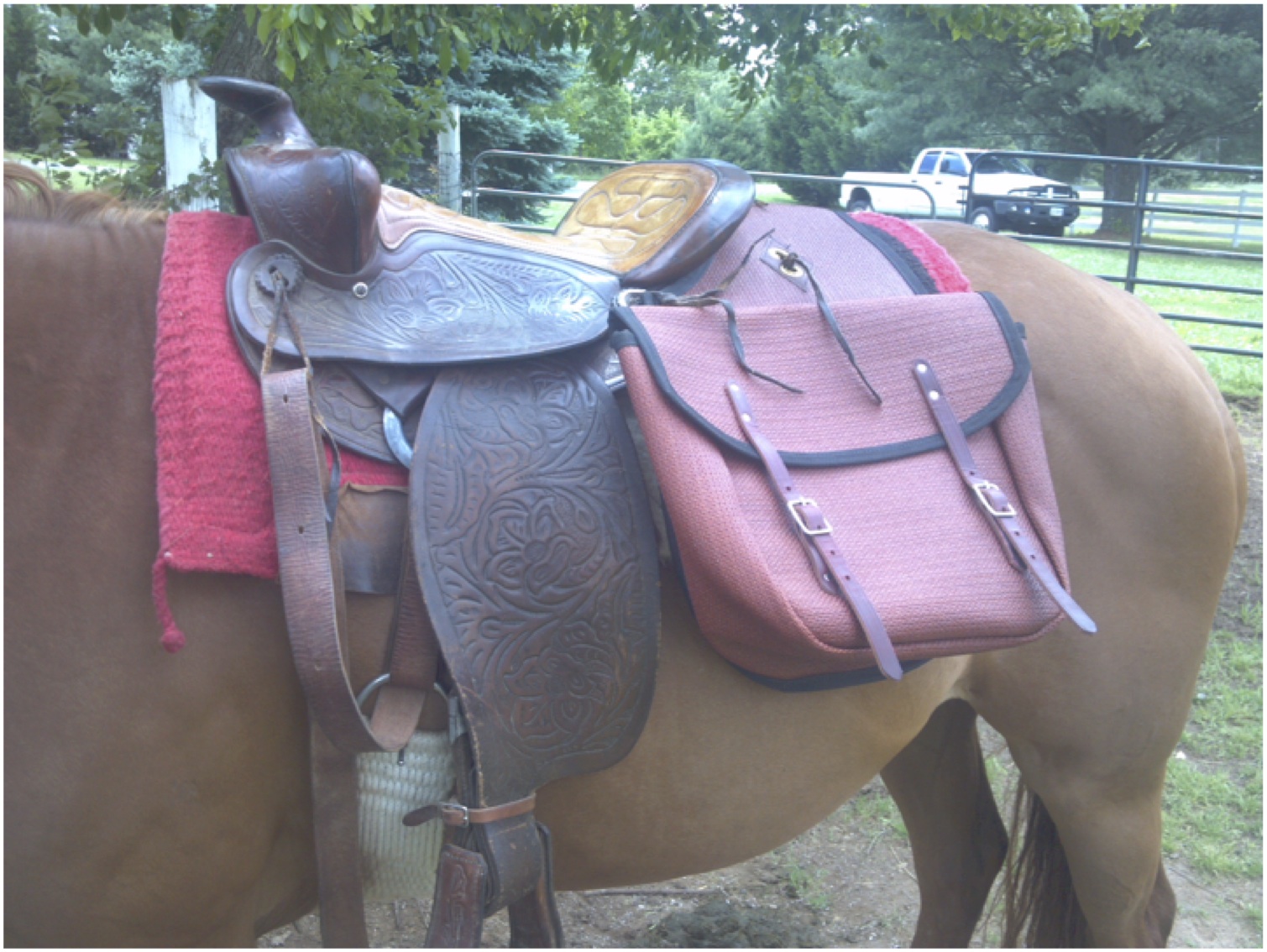
I had the first two steps going, and all I had to do was add the third. This is what I mean by piggybacking. Habits are learned through practice, and the best way I’ve found is to strap a new one onto a trusty old saddle. And let them go riding out together…

But please don’t call it “resolution” or you’ll never get anywhere. Call it desire, yearning or longing. Call it aspiration, leaning, longing. Call it something you would want. Then maybe on this second week in January we would not only remember what it was we had vowed to do, but we  could be practicing it.

Just know that in my case, it’s taking half the morning to get out the door to, you know, take on the day.

3 Comments

Filed under New Year Resolutions

The House Whisperer

photo-322

I am writing this post in Mexico, sitting on a patio with the sun in the sky and a laptop upon my lap, looking at the notes I brought down with me and wondering, just what was the fuss, anyway?

In Norteamerica I call myself a “house whisperer.” Houses tell me what they want, whether I own them or not. I believe it’s in my DNA. I once had a great uncle who couldn’t enjoy himself at a restaurant if a painting or framed print across the room was at a tilt. That’s me too. Both Uncle Fran and I would have to get up and cross the room to straighten it, before lifting a fork to our Caesar salads. Other people, they tell me, are not like this.

For years now an exterior shutter has been missing on a house across the street from where I live. In the time in which a family has rented the house, they’ve seen their careers flourish, their small sons grow, and a rambunctious black Lab settle into a mellow dog. Had I been renting the house, the first thing I would have insisted is that the owner replace the missing shutter. I’m not sure I would have thought that all the rest could happen without it.

How did I get this way? Every house I knew in Connecticut was lived in. It was in visiting my grandparents in Naples, Florida that I first turned into a voyeur of houses. A continual crop of model homes came up, and we went down there, every winter. I had never experienced anything like it, the sheer pleasure of walking through empty spaces…. and completing it in one’s mind. Afterwards I worked on all the floorplan handouts, made improvements in space planning, drew in the furniture, and thought in terms of color schemes. I was hooked.

It was one quick slippery slope from the child who rearranged her parents’ furniture in the night, to the one who drew floorplans on a pad of graph paper in the backseat of the car, to a design firm in San Diego. But that’s just where I was when I first heard of Las Brisas, in Ixtapa, Mexico. Where I am now.

Las Brisas was a Camino Real or Westin Hotel at the time. The principal of the firm was the only one of us who could afford to stay there, and he gloated about it upon return. In my memory I almost think he was the one who designed it. In any case, he impressed upon us that ancient Mayan temples were the inspiration for this hotel. Each floor, as it ascends, is shorter, and the hotel climbs to an open air lobby at the top. To walk the stone floors of open air corridors is meditating. It is remarkably minimalist and contemporary looking, a composition in stone, color, and water rushing in aqueducts.

Now that I am finally here I indeed feel like I’m in a monastery. There is a cloistered air about it, despite its openness. And though the hotel may be filled, there is never any sense of a crowd. As guests we experience wingspans of space, privacy, and remoteness. The beach is private. A hammock hangs on each room’s terrace. Time stands still. Each day is like the day before.

Tropical magic is at work for me here. Everything that was interior is turned inside out, toward the outdoors. Working with the materials at hand, roofs are thatched, flooring is continuous with terrace, and furniture is built-in, eliminating the clutter of legs. I realize I am saying this at a resort, but our wants are really quite simple.

The same thing happens in the San Juan Islands, where so many software developers who made their fortunes in Seattle build second homes of logs in the woods at waters edge to live the simple life. There is a Marie Antoinette in us all apparently. It can cost a lot or we can find it where we are by scaling back. I don’t have any problem seeing that. But then the principle of that same firm in San Diego made sure that all his designers realized a Portuguese fisherman’s cottage built with straw in the plaster walls has more integrity, and is more beautiful, than anything we might hope to do in the finest residences in La Jolla.

Not a day goes by that I don’t thank him for that.

5 Comments

Filed under Uncategorized

The Man Who Came to Dinner

2-country-road-sunset

 “After all my time on this earth, I was becoming the person I was meant to be.” Donald L. Brown

I am not in the habit of inviting authors on book tour to my home for dinner, but if I were, our life would be more interesting. Nevertheless, I took this step after hearing Donald Brown promote his book, The Morphine Dream, in Seattle a few weeks ago. Having written a memoir of my own, I consider it good form to support other memoirists. And this man’s story is extraordinary.

It is hard to know where to begin with him. As a high school dropout, former Marine, and washed-up professional athlete, Don suffered an on-the-job industrial forklift accident in 1980 that subjected him to multiple surgeries for “severe internal derangement of the knee” and years of confinement to a wheelchair. Clearly his life had changed, and somehow he would have to take matters into his own hands.

Don’s orthopedic surgeon advised him, “Go back to school. You have a fine mind. Put it to work for yourself. It’s time to rely on your intellect, not your body. Put the energy and passion you’ve always had during your athletic career to work for your mind.”

By reading and listening to motivational books and tapes, Don turned his stay at Boston’s New England Baptist Hospital into an opportunity to repurpose his life. “Where do you want to be in five years?” one tape asked him, and Don noted “Harvard Law School” on a pad of paper. Next, the motivational tape asked him where he would like to be in ten years, and despite the fact that physicians had told him he might never walk again, Don wrote down “Walking U.S.A.”

Fueled by morphine for the pain, “I was sky-high,” Brown said. “I was flying.”

“Hospitalization was good for me,” recalls Don. “I had come to realize that my athletic career had been a result of incredibly hard work and focus. I knew I had to get engaged in a new future and work as hard as I did to be a professional athlete.”

In this way Don accomplished each of his goals. From a GED to community college to transfer into Amherst College, Don landed in the Harvard Law School of his dreams. Then in 1997, following graduation, “overweight, over fifty, a diabetic, and…. lucky to be walking at all,” averaging 41 miles per day, Don made the 5,004 mile trek across the continent in 137 days. Starting at the finish line of the Boston Marathon in Copley Square and taking the northern route, he completed his journey by coming over Stevens Pass in Washington, and walking on down the coast through Oregon, Northern California and Big Sur, reaching his destination in San Simeon with the Pacific Ocean before him.

“I didn’t even bother to take off my shoes. I simply walked right in,” writes Don.

His method for turning dreams into actuality was always a carefully formulated plan of execution. While attending community college he distinguished himself by sitting front and center in lecture halls and winning every student award he could. At Amherst—still wheelchair bound—Don moved into a dorm the summer before starting “to figure out how to navigate the hills and dales of the campus, get my syllabi and books, meet my professors, and, most importantly, start reading.” From the start, Don told everyone he met at Amherst of his goal of attending Harvard Law School.

Likewise with the walk, “I knew when I departed Boston that if I could make it through the first two weeks, I would complete the entire journey.” It was a mental challenge as much as anything. Don divided each day’s walk into four ten mile walks in his head, considered crossing state lines a powerful motivator, and basically “realized I must push on, or else the notion of quitting when things got tough would rule the walk.”

Long distance walker Rob Sweetgall had taught him that “if I completed an arduous and lengthy walk one day, and then repeated it the next day without difficulty, I’d be prepared for that distance—regularly.”

Well, what could we say to that? Before us stood a man who in his life had learned so much about himself, tested it, and it held. I’m sure we squirmed a little in our chairs, then made every effort to buy the book.

That is when I invited him to dinner. What I recognized right away was his effectiveness in all things–something he hadn’t even mentioned was the writing of the book and its publication, no easy feat, I know. And at the end of the evening, at his request, Don Brown went off with a copy of my manuscript, the memoir I mentioned.

Shhh…. He is reading it now.

11 Comments

Filed under long distance walking

Why We Need Artists

dh-david-hockney-pop-art-paintings

Because I grew up on the East Coast, I still get a kick out of towns, hills, creeks, rivers, and roads with Western names. Raised on enough Westerns for it to be a part of my television DNA,  I don’t think a born Westerner would derive the same pleasure, as I made note on an impossibly long drive the names: Sweet Briar, Tom Cat Hill, Lost Man Creek, Rogue River, Wonder Stump Road, and dozens more. As a writer, I may use them someday.

“It sometimes takes a foreigner to come and see a place and paint it,” David Hockney once explained. We did not know then, on our drive to San Francisco, that we would be attending Hockney’s “A Bigger Exhibition” at the de Young Museum in Golden Gate Park. But that’s just what we did. And it made sense. It made sense of everything.

Having studied at the Royal Academy of Art in London, Hockney moved to Los Angeles in the 1960’s. There, the extraordinarily talented British artist immersed himself in swimming pools, mid-century architecture, palm trees, portraiture, and the Southern Californian sun-drenched light for twenty-five years. Returning to his native Yorkshire, England in 1996, “A Bigger Exhibition” covers the years since his return to England. Hockney’s 21st century art, one might say. More than ever now his subject is light, from the bleakness of winter to the excitement of its return in spring and summer, and throughout the hours in a day.

“People don’t look very hard,” notes Hockey. “I do, and I do something with it.” 300+ works make up this monumental and expansive exhibition in oil, watercolor, charcoal drawings, digital films, and  iPad paintings. A seventy-six year old man today, Hockney is running circles around us and calling our attention to the world.

Stepping out into the park, every which way I turned was a “Hockney.” The sunlight through trees, the trees bereft of leaves, and this sensation continued all the ride up the coast toward home. The Tuscan hillsides of Napa and Sonoma, the cathedral-like presence of redwood forests, the Big Sur experience with rocks, the Pacific as a sheet of mica, and gleaming white towns along its edge. We took the long coastal route back, following the contours of hills and river beds on roads that switched and turned south, then north again. The Old Coast Highway. And I saw it all through David Hockney’s eyes.

This is why we need artists in this world.

2 Comments

Filed under art

Going to the Movies

John WayneThe holidays have me thinking of going to the movies, an occasion that has morphed into many venues, but what has stayed consistent is our desire for escape. When I lived in NYC as a child, going to the movies at Rockefeller Center was a monumental event for which we wore our Sunday best. The film “The Wizard of Oz” played on television every Thanksgiving evening, and we waited all year to see it. Now families own it or stream it to view whenever. 

A member of my writing workshop, Paul Wagoneer recalls a time when he and his friends worked all Saturday morning to scrape together the dime it took to each attend the matinee movie. Paul is ninety now, and I am pleased again to have him as guest writer on my blog. Here is his story:

At The Majestic and The Ritz

by Paul Wagoneer

My home town boasted two theaters, sometimes grandly called cinemas: The Ritz and The Majestic. I didn’t reach the town that I called home in time to see my first movie. I began at The Grand in another county seat, 50 miles north, where I paid the price for a first-grader. Ten cents. sounds like chump change, but earning a dime took as much sweat, tears and ingenuity as a ticket in 2013.

On Saturday morning our gang in Knoxville marshaled their four-wheeled Red Flyers, each about 3 feet long. We scoured alleys for scrap iron. Heavy grates were top-of-the line, followed by bicycle sprockets and fenders and at the bottom, tin cans. Railroad track, fish plates and spikes lay beyond our dreams. About 11:00 AM our troop reached the junk yard. Mr. Gavronsky weighed the junk tottering on our coaster wagons, and if the boy was lucky, swapped his metallic load for Mr. Gavronsky’s ten metallic pennies.

At 1:00 PM the gaggle reached The Grand, to be measured against the height of the teller ticket counter, the small shelf where the clerk took the dimes. If a tall, older kid approached, he owed the astronomical quarter dollar that adults paid. But that was before the Great Depression in 1929.

The show opened with a serial where monkeys pedaled tricycles. A Pathe’ newsreel showed Hitler’s rising brown-shirts goose stepping. In the main feature, a cowboy in a black hat chased a cowboy in a white hat to a precipice, drew his six-shooter and the movie ended, to be continued next Saturday.

By 1935 the Waggoners had detoured through South Dakota, deflation and hard times to reach my home town. Centerville, Iowa was another county seat that boasted two move theatres. The Ritz for whoop-and-holler entertainment and The Majestic, where I enacted the climax of my story.

The price was still 10 or 25 cents. By then I hunkered down, vainly trying to win classification for the 10 cent ticket. I raised my money by working for dad in his new store. The program had become: coming attractions, the news, and the Shepherd of the Hills set in the Ozark Mountains and starring John Wayne, starting his ascendance to immortality.

Then as in 2013, I sat with friends and talked at the wrong time. A large man in a three piece-suit, erect in front of us, turned and said with authority, “Be quiet.” He was Mr. Bradley, the town banker. Quiet reined.

Leave a comment

Filed under movies

“Batkid Saves City”

I feel bad about the fact that in my efforts to raise extraordinary children, I fell short of being a good mom. By this I mean, in my mind costume items were kept in a costume trunk for dressing up at home or going out on Halloween. Otherwise, when we went out I wanted them well-dressed, well put-together. Now, who was I doing that for but for myself and maybe other moms?

Looking back, my daughters must have been turning their heads with awe at the girls who got to wear tutus over their pants if they felt like it, or boys of summer dressed as Spider Man, or all the children who put together the most interesting, outlandish combinations of clothes, themselves, every day. They are probably the most creative people today, including fashion designers. And many of them, I would imagine, live in San Francisco. A city that knows how to celebrate life in costume.

Witness the Batkid event in San Francisco on Friday, November 15th. No matter what one’s week was like, it had to be uplifted by a city that transformed itself into Gotham City, and the thousands of volunteers and onlookers who turned out see one little boy’s wish come true.

Miles Scott, age 5, dreamed of being Batkid. As a child battling cancer, he believed in Batman as only a child can. And Batman licked the cancer as only Batman can. In any case, superheros helped pull him through, and superheros always win. So when Miles’ treatments were finished and the leukemia went into remission, Make-A-Wish Foundation pulled out all the stops to make his wish come true.

By many accounts, the event was more phenomenal to the city than when the Giants won the World Series in 2010.

Miles came to the city with his family under the guise of picking up a Batkid costume. Everyone was in on it but Miles. In the family’s hotel room in the morning, “Breaking News” interrupted television programming with SF Police Chief Greg Suhr calling on Batkid with “We need your help!” Dressed in his new costume, Batkid scurried down to the lobby and, accompanied by an adult Batman, sped off in a black Lamborghini Batmobile—all major roads having been cleared for the event. Throughout the day the two of them sprung into action from one staged event to another: rescuing a damsel in distress tied to cable car tracks on Union Square, thwarting the Riddler’s attempted robbery of a bank vault and seeing him off in a paddy wagon, and onward to AT & T park to rescue Lou Seal, the Giant’s mascot, who had been kidnapped by the Penguin.

One long ambitious day with flash mobs and cheering crowds everywhere. A special edition of the San Francisco Chronicle newspaper read “BATKID SAVES CITY” on the front page. And the day ended with Mayor Ed Lee presenting Miles with the keys to the city. Throughout it all, the five year old boy struck the pose and the poise of the superhero that he truly is.

The story that went around the world. And as one twitter user wrote, “Sometimes humans get it right.”

3 Comments

Filed under leukemia, superheros